The Creative Metrics Meta Doesn’t Want You To See
Turn the strategy into creatives
Create Meta ads for your product
Paste your product page. ADEN'S LAB turns the offer, audience, and positioning into complete ready-to-use Meta static ads.
Free to try No prompt writing
Real-time tracking gives marketers live insights into ad performance, enabling faster decisions and better results. Unlike periodic reports, this approach updates ad metrics like impressions, CTR, and ROAS every few minutes or hours. Here's why it matters:
- Quick Problem-Solving: Spot underperforming ads early and adjust campaigns within hours instead of days.
- Effective Budget Use: Allocate funds to high-performing ads and platforms instantly.
- Cross-Platform Insights: Consolidate data from Meta, Google, TikTok, and others into one dashboard for easy comparison.
Getting Started: Setting Up Real-Time Tracking
Setting Up Tracking Systems and Tools
To track performance effectively, start by centralizing your verified ad accounts, enabling APIs, and configuring tracking parameters.
Platform Integration and API Setup
First, confirm that your Meta, Google, and TikTok ad accounts are verified and have the necessary permissions for data extraction. Each platform requires specific API configurations to enable smooth integration. For example, Meta Ads Manager provides direct tracking tools, but combining them with analytics platforms that aggregate data from multiple sources can give you a broader view of your campaigns.
Take this example: an e-commerce brand integrated their Meta, Google, and TikTok data into one dashboard. This allowed them to optimize campaigns in real time, increasing conversions by 20% while cutting ad spend by 15%.
Essential Tracking Parameters
Monitor key metrics like click-through rate (CTR), cost per click (CPC), cost per mille (CPM), impressions, and total spend. Use UTM tags to track user behavior across platforms, from the first ad interaction to the final conversion. Align your tracking with specific business goals, such as purchases, sign-ups, or app downloads.
Once tracking is in place, organize your creative assets to enable quick and efficient analysis.
Automated Data Collection
Automating data collection keeps your dashboards up to date, ensuring you always have access to the latest performance metrics. Set up automated dashboard refreshes and notifications via email, Slack, or Teams to alert you to any major changes in performance. Use color-coded dashboards to quickly spot issues, like budget overruns or underperforming campaigns, without digging through spreadsheets.
Organizing Creative Assets and Campaigns
A structured system for organizing creative assets is essential for making the most of real-time tracking. Without it, even advanced tools can fall short when it comes to identifying which elements are driving results. A well-organized approach allows for quicker adjustments and better insights.
Naming Convention Standards
Create a clear and consistent naming system that everyone on your team can follow. Include details like the campaign objective, target audience, creative format, and version number in the name. For example, "Ecom_NewCustomers_Video_V1" instantly identifies an e-commerce campaign targeting new customers with a video creative, version one. This approach makes it easier to filter data, compare performance across platforms, and reduce errors in attribution.
Centralized Asset Repository
Store all creative assets, campaign details, and performance data in a centralized location. This repository should include creative specs, launch dates, audience segments, and historical performance data. Organize assets by categories like campaign objectives or creative formats to streamline analysis and optimization. If a campaign underperforms, having immediate access to alternative assets can help you make adjustments without delay.
Cross-Platform Consistency
Ensure your organizational system works seamlessly across platforms like Meta, Google, and TikTok. Consistency is key when comparing performance data or making quick changes across multiple channels.
Privacy and Compliance Requirements
With tracking tools in place, ensure your data practices comply with privacy regulations. Real-time tracking involves user data collection, so staying on top of legal requirements is critical.
GDPR and International Compliance
If your business serves international users, you’ll need to comply with GDPR. This includes obtaining explicit consent for tracking, maintaining transparent privacy policies, and offering opt-out options. While most major platforms provide built-in compliance tools, it’s important to regularly review your practices to ensure they align with current regulations. Failing to comply can result in hefty fines and harm your brand’s reputation.
CCPA and State-Level Requirements
The California Consumer Privacy Act (CCPA) applies to businesses serving California residents, regardless of where the business is based. It requires transparency in data collection and gives users the right to know how their information is being used. Provide opt-out options for tracking while ensuring your system remains functional even with limited data collection.
Data Anonymization and Security
Collect only the data you need for performance analysis and avoid gathering personally identifiable information whenever possible. Anonymize any sensitive data and ensure your systems follow industry security standards, such as encrypted data transmission and secure API connections. Regularly audit your security measures and establish clear data retention policies. Delete unnecessary data routinely and document what you collect, how long it’s stored, and who has access to it. This not only keeps your system secure but also ensures compliance with privacy regulations.
Put the playbook to work
Apply this playbook to your page
Paste your website and the Lab will turn the strategy you are reading into a ready-to-test ads.
Free to try No prompt writing
Key Metrics and KPIs for Creative Performance
Important Metrics to Track
Tracking the right metrics can mean the difference between a highly successful campaign and wasted ad spend. The most important real-time metrics provide valuable insights into how well your creative is performing, allowing you to fine-tune your strategy and allocate your budget wisely.
Key Indicators
- Impressions: This measures how often your ad appears on users' screens and helps you understand its reach and frequency. While impressions alone don't confirm that your ad was actually seen, they provide a starting point for evaluating engagement metrics.
- Click-Through Rate (CTR): CTR shows the percentage of people who click on your ad after seeing it. A high CTR is a clear indication that your creative is resonating with the audience.
- Cost per Click (CPC) and Cost per Mille (CPM): These metrics reveal how cost-efficient your campaign is. CPC tracks how much you pay for each click, while CPM measures the cost for every 1,000 impressions, helping you optimize your spending.
- Return on Ad Spend (ROAS): This metric connects your creative's performance to actual revenue, making it especially critical for e-commerce and direct-response campaigns. A 2024 study highlighted that campaigns using real-time performance tracking saw a 30% improvement in ROAS compared to those relying on static reporting.
- Engagement Rate: By measuring user interactions like likes, shares, and comments, this metric provides insight into how captivating your creative is, even if it doesn’t directly drive clicks.
| Metric | Measurement | Significance |
|---|---|---|
| Impressions | Ad visibility | Establishes the context for reach and frequency |
| CTR | Clicks ÷ Impressions | Highlights creative effectiveness |
| CPC | Cost per click | Evaluates cost efficiency in driving engagement |
| CPM | Cost per 1,000 impressions | Tracks the cost of achieving visibility |
| ROAS | Revenue ÷ Ad Spend | Links creative to revenue generation |
| Engagement Rate | Interactions ÷ Impressions | Measures audience interaction depth |
These metrics create a solid foundation for identifying creative fatigue and improving campaign outcomes.
Spotting Creative Fatigue
Creative fatigue happens when an ad’s performance starts to drop, even though targeting and budget remain consistent. Recognizing the signs early can save your budget and keep your campaigns on track.
Key Warning Signs
Look out for declining CTRs, lower engagement rates, rising CPCs, and reduced conversion rates. Monitoring these trends in real time allows you to refresh or retire ads before they waste more of your budget.
Automated Detection Systems
Automated tools can alert you to significant dips in performance. For instance, if your average CTR is 2.0%, you might set an alert for when it drops below 1.6% - a 20% decline. Regularly reviewing and adjusting these thresholds can ensure you catch issues without triggering unnecessary alarms.
Once fatigue is identified, quick action - like refreshing or replacing creatives - can help maintain momentum and effectiveness.
Using Metrics for Optimization
Real-time data is invaluable for identifying top-performing creatives and ensuring your budget is allocated effectively.
Budget Allocation and Testing Strategies
Metrics like ROAS and CPA (Cost per Acquisition) can guide budget decisions. Regularly test your creatives to phase out underperformers and scale those that deliver the best results. For example, if Creative A achieves a ROAS of 4.5 and a CPA of $15, while Creative B only reaches a ROAS of 2.0 and a CPA of $30, reallocating budget to Creative A can significantly improve efficiency. Ongoing monitoring ensures resources are directed toward the most profitable options.
A U.S.-based e-commerce brand successfully applied this approach. They noticed one video creative had a CTR of 3.2% and a ROAS of 5.0, while another showed a CTR of 1.8% and a ROAS of 2.5. Using a real-time dashboard, they quickly paused the weaker ad and redirected their $2,000 daily budget to the stronger performer. This adjustment boosted conversions by 22% without increasing overall spend.
Running campaigns across multiple platforms? Comparing metrics like CTR and engagement across channels such as Meta and Google can help you identify which creatives are performing best. Real-time dashboards make it easy to spot patterns and scale successful ads across different audiences.
To optimize effectively, act quickly on real-time insights. Tools like color-coded dashboards and automated alerts can highlight issues such as budget overspending or underperforming ads, allowing you to step in and make adjustments. Whether it’s addressing creative fatigue or capitalizing on a high-performing ad, timely intervention is key.
Tracking Ad Performance: Which Ads Perform Best?
Using Tools for Real-Time Analytics
Modern analytics tools have revolutionized the way data is collected and analyzed. They automate tedious tasks, deliver instant insights, and allow marketers to adjust campaigns on the fly. Platforms like ADEN'S LAB are paving the way for real-time creative insights, offering powerful solutions for ad generation and performance tracking.
ADEN'S LAB: AI-Powered Ad Generation and Analytics
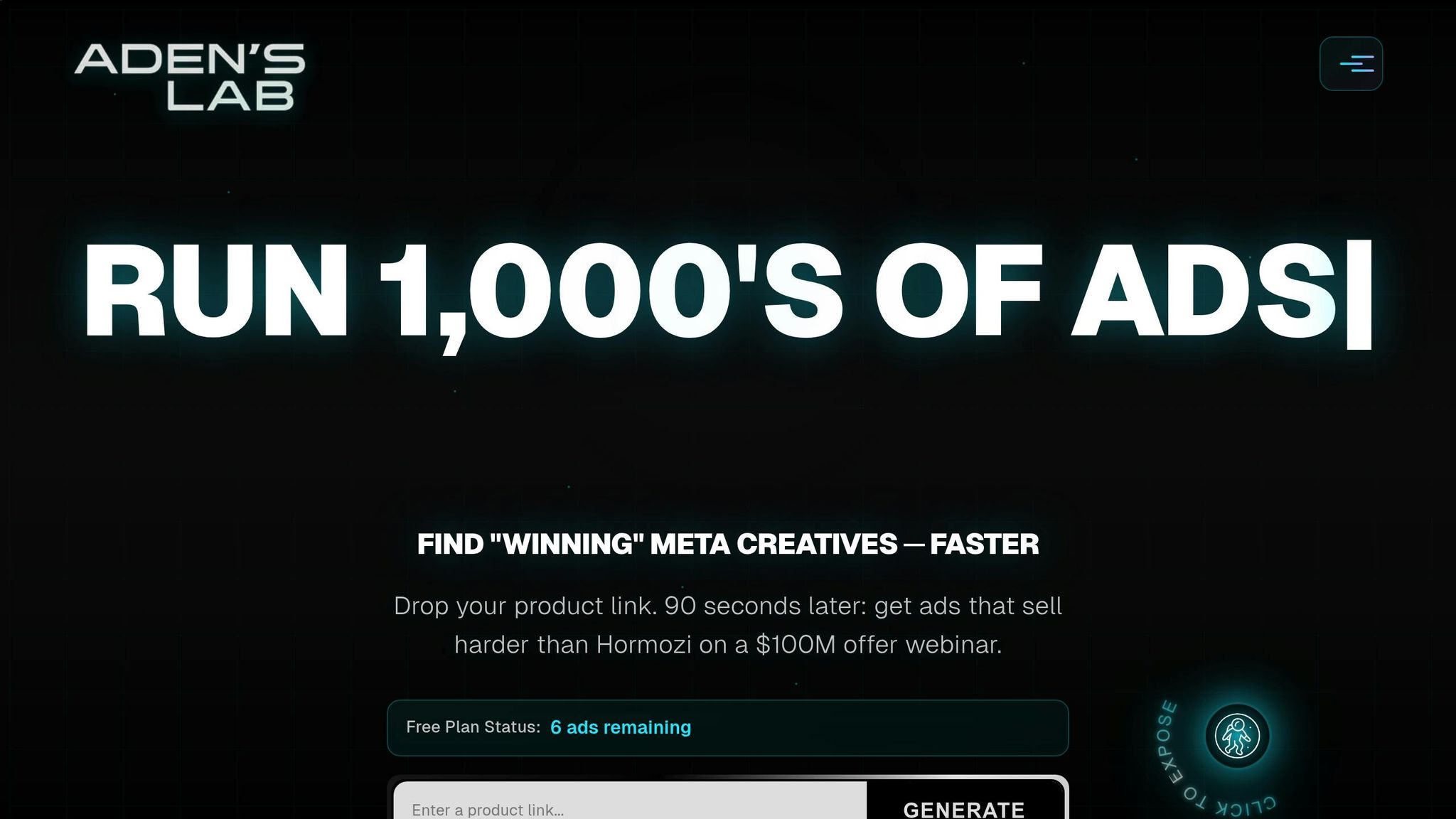
ADEN'S LAB combines artificial intelligence with performance optimization to create Meta ads in as little as 90 seconds using just your product link. With the ability to generate over 1,000 ads daily, it supports continuous creative testing at an impressive scale.
Here’s how it works: the platform pulls details from your product page - images, copy, reviews, and brand tone - and processes them using an AI system trained on millions of dollars in ad spend data. This ensures that each creative is designed to drive conversions, not just build brand awareness.
Every ad kit includes multiple images for each concept, 3+ headlines, and 3+ body copy options, all tailored for Meta placements. This setup gives you plenty of assets for A/B testing and performance analysis while maintaining your brand identity.
And the cost? At just $9 per 10 ads, ADEN'S LAB slashes production expenses by 100x compared to traditional creative teams. This allows marketers to shift their budgets toward testing and scaling successful creatives instead of sinking money into production.
"We don't refund - we outperform. If your ads don't pay for themselves at least 25x, we'll build you another batch free until they do." – ADEN'S LAB
Automated vs. Manual Tracking
Managing multiple campaigns across platforms highlights the stark difference between automated and manual tracking. Tools like ADEN'S LAB eliminate the need for logging into multiple accounts, downloading reports, and manually updating spreadsheets.
| Feature | Automated Tools (e.g., ADEN'S LAB) | Manual Spreadsheet Tracking |
|---|---|---|
| Data Refresh Rate | Real-time or near real-time | Daily/weekly manual updates |
| Error Rate | Low (automated data collection) | Higher error rate |
| Scalability | High (handles hundreds of ads) | Limited scalability |
| Alerting/Notifications | Automated, instant alerts | Delayed manual updates |
| Cross-Platform Integration | Yes (multi-channel dashboards) | No (manual aggregation required) |
| Optimization Speed | Fast (immediate insights) | Slow (delayed by manual processes) |
Automated tools offer real-time data aggregation and visualization, reducing human error and enabling faster decision-making. When managing hundreds of creatives at once, these tools are essential for spotting trends, identifying issues, and addressing creative fatigue before they impact your budget.
Scalability is a game-changer for growing businesses. While manual tracking might suffice for a handful of campaigns, it quickly becomes unmanageable as your efforts expand. Automated platforms effortlessly handle larger volumes, ensuring accuracy and speed at scale.
Adding Supporting Platforms
To complement automated systems like ADEN'S LAB, additional tools can streamline cross-channel analytics and team collaboration. Multi-channel dashboards, such as Google Looker Studio or Coupler.io, consolidate performance data from platforms like Meta Ads Manager and Google Ads into a single, easy-to-read interface.
These dashboards save time by eliminating the need to switch between platforms or manually sync data. They also reduce errors and make it easier to compare creative performance across channels, helping you identify which ads work best where.
Automated alerts can further enhance your workflow. Integrate tools like Slack, email, or Microsoft Teams to notify your team of performance changes. For instance, if your CTR drops below 1.6%, you’ll receive an instant alert to investigate and take action.
Data connectors like Supermetrics can pull performance data from multiple sources into centralized reporting tools, giving you a complete view of your creative effectiveness. This enables cross-channel optimization and better decision-making.
To ensure clarity, set your dashboards to U.S. standards (USD, MM/DD/YYYY, comma-separated numbers). By starting with a core platform like ADEN'S LAB for ad creation and tracking, and then adding tools for visualization and collaboration, you can build a tech stack that provides real-time insights without overwhelming your team.
Optimization Strategies Using Real-Time Data
Using real-time data means you don’t have to wait around for outdated reports to make decisions. Instead, you can quickly spot trends, identify which ads are performing best, and adjust your campaigns within hours. This kind of speed gives you a competitive edge, letting you make the most of high-performing ads while others are still catching up. Here’s how real-time data can help with scaling, avoiding ad fatigue, and testing creative strategies.
Scaling Winning Creatives
When you notice a creative is performing well - based on metrics like click-through rates, conversion rates, or return on ad spend (ROAS) - it’s time to act fast. Real-time dashboards make it easier to monitor these numbers across all platforms at once, ensuring you don’t miss opportunities.
Start by reallocating your budget to the top-performing ad sets. Adjust the daily spend and keep a close eye on the results. If the ads continue to perform well, scale up gradually to maintain momentum.
You can also expand your reach by targeting similar audiences or exploring new regions. For example, using lookalike audiences or slightly broadening interest-based targeting can help you find new potential customers. The key is to confirm these new segments are working by continuously tracking their performance in real time.
Fixing Creative Fatigue Before It Hurts Performance
Even the best ads can lose their appeal after repeated exposure. That’s where real-time tracking and automated alerts come into play. They help you spot early signs of creative fatigue before it takes a toll on performance.
Set up alerts to notify your team when key metrics - like engagement or conversions - start to dip. This way, you can act quickly instead of waiting for a routine review to uncover the problem.
Having a variety of creative options ready to go is essential. Rotate new visuals, headlines, or copy as soon as fatigue sets in to keep your audience engaged. Don’t wait for significant drops in performance; regularly refreshing your ads ensures they stay effective. Tailoring these updates to audience segments showing early fatigue can also help maintain strong results across different groups.
Automating Creative Testing and Updates
To keep up with the fast pace of digital advertising, automated testing is a game-changer. Platforms like ADEN'S LAB are designed to handle this challenge by generating over 1,000 ads daily. This level of automation allows for large-scale testing without needing constant manual input.
Each ad kit includes a variety of creative elements, making it easy to test different combinations automatically. This eliminates delays caused by waiting for new designs or copy, letting you test and refine your campaigns faster.
AI-driven performance analysis speeds up the process even more. By analyzing extensive ad spend data, the system can quickly identify which creative elements are driving conversions. This means you can focus on scaling what works best while cutting out what doesn’t.
Frequent updates also keep production costs in check. Instead of waiting for major overhauls, underperforming ads can be updated regularly, keeping your campaigns fresh and effective. Real-time feedback loops further enhance this process. For instance, if a particular headline or design element is working well, the system can generate variations that build on those insights.
ADEN'S LAB takes this a step further with a bold promise: a 25x ROI guarantee.
"We don't refund - we outperform. If your ads don't pay for themselves at least 25x, we'll build you another batch free until they do." – ADEN'S LAB
This commitment underscores the importance of measurable results and continuous improvement in today’s fast-moving advertising landscape. By leveraging real-time data and automation, you can stay ahead of the curve and ensure your campaigns deliver.
Future of Real-Time Creative Performance Tracking
The way we track creative performance is undergoing a major transformation, thanks to advancements in artificial intelligence and evolving privacy regulations. These changes are reshaping how campaigns are measured and optimized, offering marketers new ways to stay ahead of the competition.
AI-Driven Creative Data
Artificial intelligence is revolutionizing creative performance tracking. It’s no longer just about collecting data - it’s about using predictive analysis and automation to optimize campaigns before they even begin. Instead of waiting days or weeks for performance data to roll in, AI can now identify patterns and predict which creative elements are most likely to succeed.
One of the most exciting developments is AI's ability to generate and test ad variations at an incredible scale. Advanced AI tools can create hundreds, even thousands, of ad versions daily, each fine-tuned using real-time performance data. These systems, often integrated with tools like ChatGPT and real-time dashboards, provide instant recommendations. Marketers can now respond to performance changes within minutes, eliminating the delays caused by manual analysis.
The focus is shifting from purely aesthetic design to performance-driven creative strategies. AI tools analyze factors like psychological triggers, attention-grabbing elements, and conversion rates to craft ads designed to deliver results. This approach reduces guesswork, enabling marketers to target audience preferences with greater precision. These advancements are laying the groundwork for more strategic, data-integrated practices across multiple platforms.
Best Practices for Long-Term Success
To build a reliable system for tracking creative performance, marketers need a strategic, well-organized approach. Consolidating data from platforms like Meta, Google, and TikTok into unified dashboards allows for a comprehensive view of performance across channels.
Cross-platform visibility is now essential since advertising budgets are often spread across multiple channels. Understanding how each platform performs helps marketers allocate resources effectively and identify the best-performing channels for their target audience. Collaboration between creative and analytics teams is also critical. Teams that work closely together can act on performance data faster, improving decision-making and campaign results.
Real-time analytics offer a significant advantage, enabling faster feedback loops. Marketers can react to shifts in performance within hours, capturing opportunities that slower teams might miss. Tools like Looker Studio, Google Sheets, and Excel are increasingly used to make real-time data accessible and actionable for teams. Choosing the right tools based on your team’s technical expertise ensures you can dive deep into the data for effective optimization.
Adapting to Privacy-First Approaches
As the industry moves toward stricter privacy regulations, marketers must adapt their strategies to balance effective tracking with ethical data practices. Multi-channel dashboards are becoming a go-to solution, helping marketers maintain tracking efficiency while reducing reliance on individual data sources. By comparing performance across platforms in real time, marketers can adjust budgets dynamically without over-relying on any single source.
This shift toward privacy-first methods is affecting businesses of all sizes. For B2B companies and agencies, real-time tracking has become a key tool for improving campaign agility and ROI while staying compliant. Smaller teams, too, are benefiting from these advanced capabilities, leveling the playing field. With third-party tracking becoming more restricted, first-party data is growing in importance. Marketers who focus on building direct relationships with their audiences and collecting data responsibly will gain a significant edge in this new landscape.
The challenge lies in maintaining effective tracking while respecting privacy, but tools that provide actionable insights without compromising compliance offer a promising solution.
Conclusion
Keeping up with real-time creative performance tracking has become a must for marketers aiming to stay ahead. By leveraging real-time analytics, marketers can make quick, informed decisions that boost ROI, outperforming the limitations of delayed reporting systems.
Real-time dashboards are game-changers for campaign management. As mentioned earlier, tools like automated alerts and unified dashboards allow teams to respond swiftly to shifts in campaign performance. For instance, when a media buying team identifies creative fatigue through real-time data and replaces underperforming ads with fresh variations within days, they can cut cost per acquisition by 20%. Such agility provides a clear edge over traditional methods that rely on slower reporting processes.
This kind of responsiveness is especially crucial for campaigns that run across multiple platforms. Unified dashboards simplify cross-platform management, eliminating the errors and delays that often come with manually piecing together data from multiple sources. Without this efficiency, businesses risk wasting thousands of dollars in ad spend due to outdated or inaccurate insights.
AI-powered creative generation, paired with real-time tracking, takes things even further. Marketers can now produce hundreds of ad variations daily, each tailored to the latest performance data and optimized for conversions right from the start. This approach has the potential to slash creative production costs by as much as 100×.
To make the most of real-time tracking, focus on these strategies: consolidate all your data sources, set up automated alerts to catch performance issues early, and use consistent naming conventions to ensure accurate reporting across channels. Whether you're scaling an e-commerce brand or managing B2B campaigns, real-time performance tracking can drive the kind of sustainable growth that sets businesses apart in today’s fast-paced digital landscape.
Ultimately, success will belong to marketers who can act in minutes, not days. Real-time creative performance tracking isn’t just about having better data - it’s about building the agility that separates market leaders from the rest.
FAQs
How does real-time creative performance tracking make ad campaigns more efficient compared to traditional reporting methods?
Real-time creative performance tracking takes ad campaign management to the next level by offering instant feedback on how your ads are doing. Instead of waiting for periodic reports, which often come with delays, this method lets marketers see what's working - and what’s not - right away.
This quick access to data means you can make immediate adjustments to targeting, messaging, or creative elements, fine-tuning your campaigns as they run. The result? You save time and ensure your ad budget is focused on strategies that drive the best results.
What are the key steps and tools for setting up an effective real-time tracking system for cross-platform ad campaigns?
To establish a strong real-time tracking system for cross-platform ad campaigns, the first step is to pinpoint your key performance indicators (KPIs) and ensure they align with your campaign objectives. This alignment ensures you're measuring what truly matters for your goals.
Next, use tools that work effortlessly across multiple platforms to gather and analyze data in real time. For instance, platforms like ADEN'S LAB make this easier by creating ads based on data insights, specifically designed to drive conversions. With tools like these, you can adjust campaigns quickly, cut unnecessary expenses, and concentrate on scaling your efforts efficiently.
How can businesses stay compliant with privacy laws like GDPR and CCPA when using real-time tracking tools?
To align with privacy regulations such as GDPR and CCPA, businesses need to focus on transparency and securing user consent. Make sure to clearly explain how data is collected, used, and stored. Additionally, obtain explicit consent before tracking any user activity. Using strong data anonymization methods can further safeguard personal information and reduce the chances of data breaches.
It's also important to regularly review and adjust privacy practices to keep up with changing regulations. Collaborating with legal professionals can help ensure your tracking tools and processes meet all compliance standards. Taking these steps not only helps protect user data but also builds trust with your audience while making the most of real-time tracking tools.
Your next ad batch starts here
Finish with a ready-to-test ad batch
Paste your website to generate static creatives. Drop the link → get ads in about 90 seconds → upload them to Meta → scale.
Free to try No prompt writing