AI Tagging for Meta Ads: 2025 Trends You Can’t Ignore
Turn the strategy into creatives
Create Meta ads for your product
Paste your product page. ADEN'S LAB turns the offer, audience, and positioning into complete ready-to-use Meta static ads.
Free to try No prompt writing
AI-driven tagging is reshaping Meta advertising in 2025 by automating how ad creatives are analyzed, categorized, and optimized. This technology helps marketers streamline campaigns, improve performance, and reduce costs. Here's what you need to know:
- What It Is: AI tagging uses machine learning to label ad elements (images, text, etc.) based on their features and performance data.
- Why It Matters: It enhances campaign efficiency, provides precise audience insights, and scales ad creation without increasing costs.
- Key Trends: Privacy-first strategies now focus on high-quality first-party data and contextual signals due to stricter privacy regulations.
- Performance Boosts: AI tagging improves Return on Ad Spend (ROAS), speeds up campaign learning, and enables better creative testing.
Platforms like ADEN'S LAB are leading the charge, automating ad creation and delivering over 1,000 variations daily while aligning with brand guidelines. For marketers, leveraging AI tagging is essential to stay competitive in 2025's evolving digital landscape.
Analyze Your Data Faster With This Meta Ads Labeling System

Put the playbook to work
Apply this playbook to your page
Paste your website and the Lab will turn the strategy you are reading into a ready-to-test ads.
Free to try No prompt writing
Key Trends in AI Tagging for Meta Ads
In 2025, one of the standout shifts in AI tagging for Meta ad campaigns is the move toward privacy-first strategies. These approaches prioritize using high-quality, consented first-party data and contextual signals to ensure compliance and effectiveness.
Privacy-First Retargeting and Data Quality
As traditional third-party tracking becomes less reliable, advertisers are turning to consented first-party data to maintain precision in targeting. Contextual tagging, which uses content relevance, seasonal trends, and demographic insights, plays a key role in crafting campaigns that are both effective and privacy-compliant. This shift ensures campaigns remain data-driven while respecting user privacy.
The foundation of this approach lies in consent-based data collection, which builds legally compliant and trustworthy tag profiles. While this might lead to a reduction in data volume, the trade-off is improved data quality that enhances campaign performance.
To maximize the potential of first-party data, businesses can integrate information from CRM systems, email interactions, and website analytics. This enables hyper-personalized retargeting and lookalike audience strategies. By prioritizing data quality over sheer quantity, AI tagging systems can produce insights that are not only more accurate but also lead to better predictability and results in Meta ad campaigns.
Impact of AI Tagging on Meta Ad Performance
AI tagging has become a game-changer for Meta ad campaigns, enhancing performance by combining privacy-conscious approaches with data-driven precision. This technology has been driving measurable improvements in key metrics, outperforming traditional targeting methods in both efficiency and profitability.
Better Return on Ad Spend (ROAS) and Efficiency
AI tagging significantly improves Return on Ad Spend (ROAS) by refining audience targeting and optimizing creative content. By analyzing engagement patterns and conversion signals in real time, AI ensures budgets are reallocated from underperforming segments to high-value audiences. This reduces Cost Per Acquisition (CPA) while maintaining - or even increasing - conversion rates.
With its precision targeting, AI tagging leverages contextual signals and first-party data to align ad content with audience preferences, boosting Click-Through Rates (CTR). This higher engagement strengthens Meta's ad delivery algorithms, enhancing overall campaign performance. Additionally, improved attribution accuracy allows advertisers to track user interactions across multiple touchpoints, offering clearer insights into which creative elements and audience segments drive real conversions. These financial gains enable campaigns to adapt more quickly and effectively.
Faster Campaign Learning and Optimization
AI tagging doesn’t just improve ROAS - it also speeds up campaign learning. By providing richer initial data, including behavioral insights and predictive engagement metrics, AI shortens Meta’s typical learning phase. This means campaigns can stabilize and perform effectively in a shorter time frame.
Real-time adaptation is another key benefit. AI tagging monitors audience behavior and automatically updates targeting parameters as market conditions change. This ensures consistent ad delivery without requiring manual adjustments, allowing campaigns to maintain strong performance even in shifting environments.
Better Creative Testing and Budget Allocation
AI tagging takes creative testing to the next level by automating the process and analyzing multiple ad variations in real time. Instead of relying solely on basic A/B testing, campaigns can simultaneously evaluate combinations of headlines, images, calls-to-action, and targeting parameters.
Predictive performance modeling helps identify promising creative elements early by analyzing initial engagement data against historical trends. This allows advertisers to strategically allocate budgets to the best-performing combinations without manual oversight. AI tagging also detects creative fatigue, signaling when specific assets start losing effectiveness. It can suggest fresh variations or pause underperforming content before it impacts overall results. This continuous cycle of optimization ensures Meta ad campaigns maintain consistently strong performance over time.
Best Practices for Effective AI Tagging
Optimizing AI tagging is about more than just using the latest tools - it's about implementing strategies that maximize both performance and relevance. The difference between campaigns that barely move the needle and those that truly excel often lies in how well these best practices are applied.
Maintain High-Quality Input Data
The foundation of effective AI tagging is high-quality data. Start by cleaning up your data: eliminate duplicates, standardize naming conventions, and ensure every customer interaction is tracked accurately. Your product catalog should include detailed descriptions, correct pricing, and consistent categorization. Missing or inconsistent information forces AI to make assumptions, which can lead to irrelevant or generic tags.
In today's privacy-conscious world, first-party data is more important than ever. Make sure your customer data captures behavioral signals like purchase history, browsing habits, and engagement preferences. The more detailed and accurate your dataset, the better AI can tailor tags for specific audience segments.
To keep your data sharp, adopt regular hygiene practices. Automate processes to flag incomplete records, outdated entries, or unusual patterns. Once your data is optimized, you can use automation to enhance creative outputs dynamically, ensuring your campaigns stay relevant and effective.
Use Dynamic Creative Optimization (DCO)
Dynamic Creative Optimization (DCO) allows AI to combine modular creative elements in real time based on audience behavior and performance data. Break your creative assets into individual components - headlines, images, body text, calls-to-action, overlays - and tag each with attributes like tone, audience segment, or product category. This gives AI the flexibility to create endless combinations without manual input.
As the campaign progresses, AI identifies which combinations resonate most with specific audiences and reallocates budgets and impressions toward those high-performing variations. This process isn’t limited to the initial testing phase; it evolves continuously throughout the campaign.
To further refine your DCO strategy, consider factors like seasonality and context. Tag creative elements with details like geographic relevance, event triggers, or time sensitivity. This helps AI surface the right messaging at the right time, keeping your ads timely and engaging without constant manual adjustments.
Align AI-Generated Tags with Brand Guidelines
While AI excels at optimizing performance, it’s crucial to ensure that AI-generated tags align with your brand's voice, visual identity, and messaging. Establish clear brand guidelines - approved language, tone, and visual standards - that the AI system can reference when generating tags or assembling creative combinations. This ensures consistency and prevents the creation of content that, while effective, might stray from your brand identity.
Pay special attention to visual consistency. Set up approval workflows for creative combinations involving elements like logos, colors, and typography. While AI can handle the heavy lifting, human oversight is essential to maintain brand integrity.
Perform regular brand audits to ensure standards remain intact as the AI system evolves. Review tags and creative outputs weekly to catch any deviations and refine the AI’s parameters for better alignment in future campaigns.
Another powerful tactic? Train your AI system using historical data from your most successful campaigns. By feeding it examples of past on-brand, high-performing content, you help the system understand not just what converts, but what stays true to your brand’s identity.
The key to success lies in balancing AI’s efficiency with human expertise. Let AI manage the technical aspects - tag generation and performance optimization - while humans oversee brand alignment and strategic direction. This combination ensures your campaigns meet performance goals without compromising your brand’s identity, creating a win-win scenario for both marketers and audiences.
Case Study: ADEN'S LAB and Scalable AI Tagging for Meta Ads
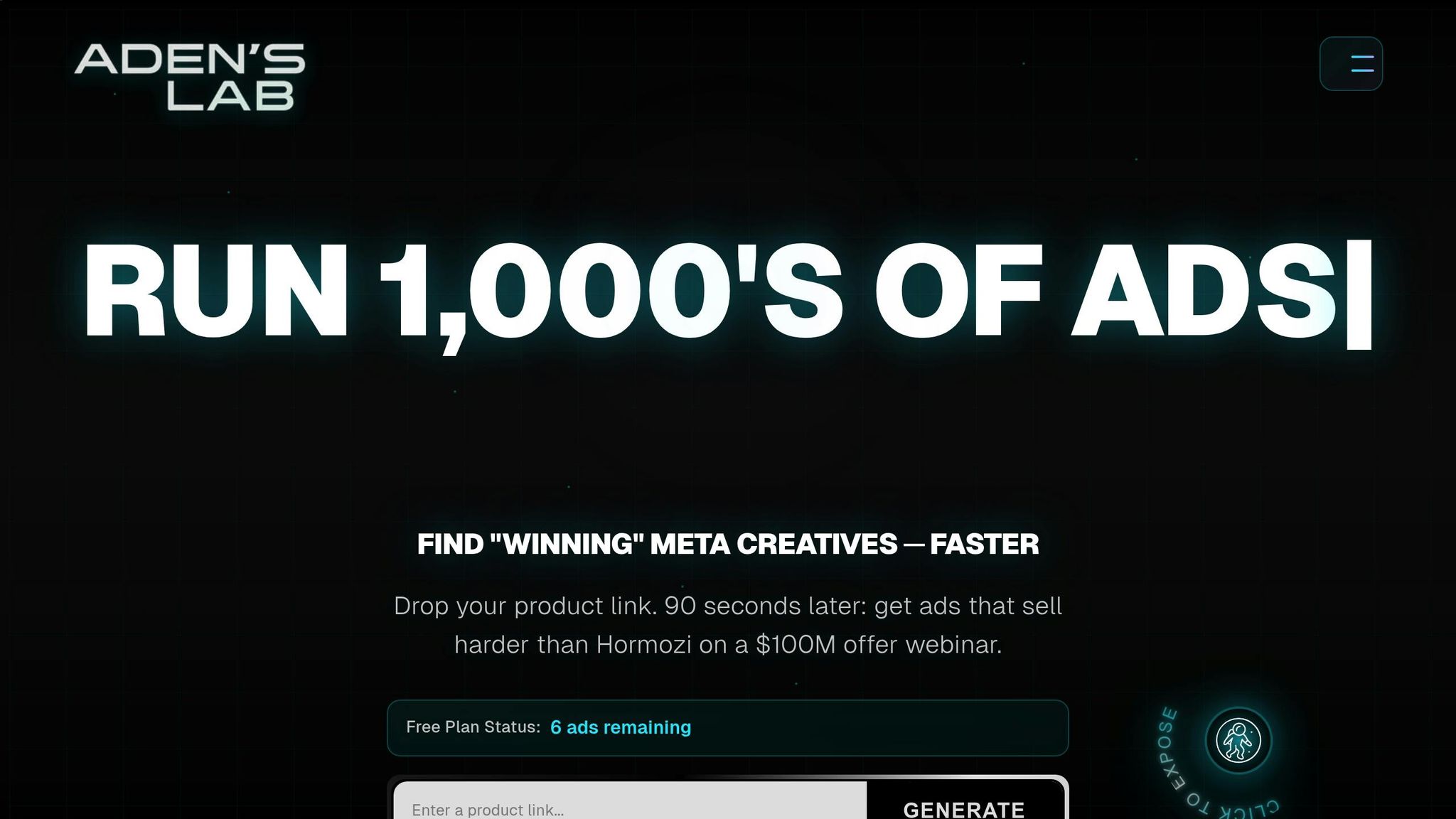
ADEN'S LAB is redefining how e-commerce brands and performance marketers approach Meta ad creation by using AI-powered asset tagging. This innovative approach simplifies the process and keeps up with the latest trends in AI tagging for advertising.
How ADEN'S LAB Transforms Meta Ad Creation
ADEN'S LAB takes the complexity out of ad creation by automatically organizing, categorizing, and fine-tuning creative elements in just seconds. All it takes is a product link, and the platform’s AI gets to work analyzing product data to produce creative combinations designed to drive conversions. Each element is sorted based on its relevance to the audience, alignment with the brand, and potential to make an impact.
In just 90 seconds, the system can churn out multiple ad variations, each tailored for optimal performance and precision targeting. What sets ADEN'S LAB apart is its use of buyer psychology-driven tagging, which identifies emotional triggers and purchasing motivations. This ensures the ads strike a chord with specific customer segments, making them more effective. The automation here doesn’t just save time; it lays the groundwork for scaling ad campaigns like never before.
Scalable Growth for High-Performance Campaigns
Scaling ad campaigns has never been easier. ADEN'S LAB can generate over 1,000 ads daily - something that would traditionally require a large team of designers and copywriters working for weeks. This level of automation enables rapid testing, allowing marketers to pinpoint successful ad variations and tweak strategies in hours instead of weeks.
The cost savings are just as impressive. By cutting production costs by 100x compared to traditional methods, ADEN'S LAB makes it possible to create hundreds of ready-to-launch, fully tagged ads at a fraction of the usual expense. Plus, with a 25X ROI guarantee, marketers can trust that the platform consistently delivers high-performing creatives with predictable results.
Why It’s a Game-Changer for U.S. Marketers
For marketers in the U.S., ADEN'S LAB offers a competitive edge in the fast-moving world of Meta advertising. The ability to produce hundreds of ads daily ensures brands can keep their creative assets fresh, a crucial factor in capturing audience attention and staying ahead of competitors.
The platform’s paid plans come with commercial rights, giving marketers full ownership of AI-generated content - an essential feature for scaling campaigns across various markets and platforms. And thanks to its ability to match existing brand styles, every ad stays consistent with established guidelines, strengthening brand recognition and customer trust.
ADEN'S LAB also integrates seamlessly with product links, analyzing key features, benefits, and selling points to create highly targeted ad variations. This is especially useful during peak shopping seasons when quick creative updates can make all the difference in performance.
With its data-driven approach, ADEN'S LAB offers actionable insights that help marketers allocate budgets wisely and scale campaigns effectively. As we look toward 2025, this platform is proving to be a powerful ally for driving growth and maximizing advertising impact.
Conclusion
AI tagging has reshaped Meta advertising in 2025, replacing manual processes with automated systems that bring unmatched precision and scalability to ad campaigns.
Recent trends highlight how crucial AI tagging has become for staying competitive in Meta advertising. Brands leveraging this technology are achieving faster campaign optimization, improved ROAS, and the ability to test creative variations at a pace that was unimaginable just a few years ago. These AI-driven systems allow marketers to allocate budgets more efficiently, cut creative production costs, and identify top-performing ad combinations in hours instead of weeks.
These advancements are redefining how marketers approach their strategies in 2025.
Key Takeaways for Marketers in 2025
Here are some important insights to keep in mind when incorporating AI tagging into your campaigns.
The top-performing Meta advertisers this year are those who focus on data quality and embrace automation while staying true to their brand's identity. High-quality input data remains essential for effective AI tagging, and dynamic creative optimization ensures that the right message connects with the right audience at the right moment.
Platforms like ADEN'S LAB showcase the potential of combining AI tagging with scalable ad creation. With the ability to produce over 1,000 ads daily while adhering to brand guidelines and leveraging buyer psychology, this approach represents the cutting edge of Meta advertising. For marketers in the U.S., this level of automation offers the speed and scale needed to thrive in highly competitive markets.
Beyond reducing production costs by as much as 100x compared to traditional methods, the real advantage lies in the ability to test and optimize rapidly. Marketers who can outpace their competitors in testing will consistently uncover winning creative combinations and dominate their industries.
As we progress through 2025, the brands that succeed will be those that see AI tagging not as a replacement for human creativity but as a tool to enhance strategic decision-making. By automating the heavy lifting of asset organization and optimization, marketers can focus on higher-level planning, scaling successful campaigns, and upholding brand consistency and data quality.
Striking this balance creates a growth engine that renders outdated methods a thing of the past.
FAQs
How does AI tagging improve the effectiveness of Meta ad campaigns in 2025?
AI tagging is reshaping Meta ad campaigns in 2025 by simplifying key tasks such as audience targeting, creative adjustments, and budget allocation. By automating these processes, marketers can make quicker tweaks to campaigns and deliver ads that connect more effectively with their intended audiences.
On top of that, AI-powered tagging allows for the rapid creation of multiple ad variations, cutting down on manual effort while offering valuable insights to boost performance. This method not only makes scaling campaigns easier but also helps brands save both time and money, ensuring campaigns run more efficiently.
How do privacy-first strategies affect data collection and ad targeting for marketers?
Marketers are shifting gears to embrace privacy-first strategies, emphasizing consumer consent, data security, and transparency. As third-party cookies fade into the background, advertisers are leaning on alternatives like first-party data, contextual targeting, and anonymized insights to connect with their audiences.
This transformation pushes marketers to forge deeper, more direct connections with consumers while adhering to privacy regulations. By prioritizing trust and openness, brands can continue running effective campaigns without compromising user privacy in today's stricter regulatory landscape.
How can marketers make sure AI-generated tags reflect their brand's identity and guidelines?
To make sure AI-generated tags match your brand's identity, begin with well-defined brand guidelines. These should detail your tone of voice, style preferences, and visual elements like logos and color schemes. Choose AI tools that can consistently adhere to these rules, and set up automated checks to ensure accuracy.
Keep your brand guidelines up to date and routinely review the AI tagging process. This way, you can adjust to any shifts in your branding and ensure consistency across all campaigns, helping to strengthen your brand identity.
Your next ad batch starts here
Finish with a ready-to-test ad batch
Paste your website to generate static creatives. Drop the link → get ads in about 90 seconds → upload them to Meta → scale.
Free to try No prompt writing