Best Meta Ad Prompts for Skincare Products
Use the prompts on your real offer
Generate these ad angles for your product
Skip the blank prompt box. Paste your product page and ADEN'S LAB applies the angles to your offer, images, headlines, and copy.
Free to try No prompt writing
Want to create Meta ads that actually sell skincare products? Here’s the secret: focus on real customer concerns, clear product benefits, and engagement strategies. AI-powered ad prompts now make it easier than ever to craft effective campaigns by analyzing data from thousands of ads. This means less guesswork and more results.
Key takeaways:
- Target pain points like wasted money, outdated routines, or emotional struggles tied to skin issues.
- Highlight unique product benefits, such as waterless formulations or long-term barrier repair.
- Use engagement tactics like storytelling, comment-based interactions, and risk-free guarantees.
Brands like Frøya Organics have already seen success by addressing menopausal skin concerns with ads that emphasize natural solutions and bold product claims. A targeted approach like this can lower costs and boost conversions. Ready to refine your skincare campaigns? Let’s dive in.
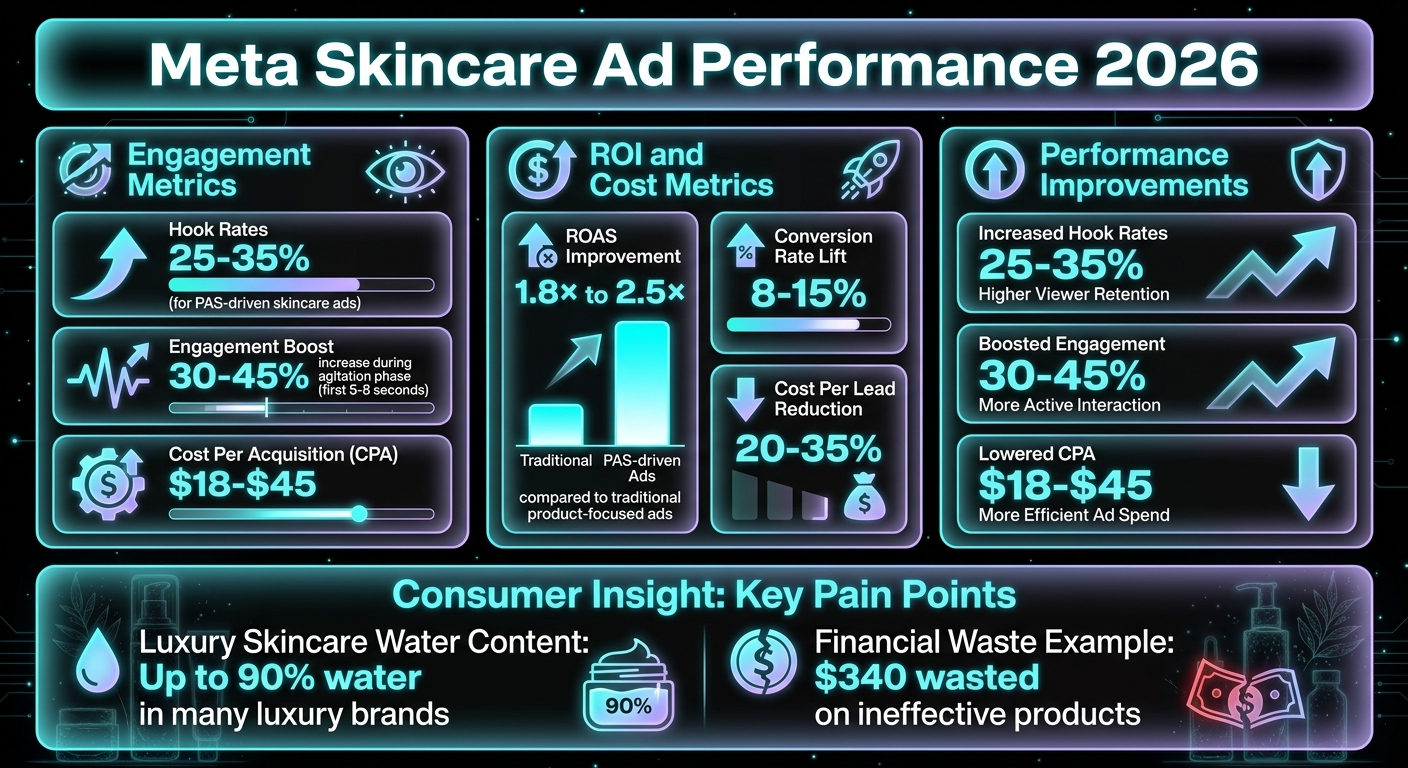
Meta Ad Performance Metrics for Skincare Campaigns 2026
1. Targeted Pain Points
"Wasted $340 on Products That Didn't Work?"
One of the most effective ways to grab attention with Meta ads is by highlighting financial waste. Think about it - how many people have spent hundreds on "miracle" products that end up collecting dust on a shelf? Ads that mention specific amounts, like "$340 wasted on products that didn’t deliver", tap into a common frustration and trigger loss aversion. This strategy resonates because it reflects the disappointment many consumers already feel, making them pause and take notice.
"Your 20s Skincare Routine Isn't Cutting It Anymore"
Life changes, and so do skin needs. Ads focusing on life-stage concerns hit home for many. Whether it’s stress-induced adult acne or the dryness and thinning skin that comes with menopause, these issues require more than the same old routines. Bescher Beauty nailed this approach in April 2026 by emphasizing how outdated skincare routines fall short. Their Sea Cucumber Collagen product was positioned as a solution that "heals skin from the seabed up", offering a natural alternative to harsh chemicals.
"Tired of Hiding Behind Heavy Makeup?"
Skin issues aren't just physical - they take an emotional toll too. Ads that acknowledge the confidence struggles tied to skin problems resonate deeply. Whether it’s skipping social events, feeling uncomfortable in photos, or relying on heavy foundation to feel presentable, these pain points are incredibly relatable. Addressing these emotions for just 5–8 seconds can boost engagement by 30–45% and bring cost-per-acquisition (CPA) down to the $18–$45 range. By connecting with these frustrations, brands can seamlessly transition into showcasing how their products provide real solutions.
Put the playbook to work
Apply this playbook to your page
Paste your website and the Lab will turn the strategy you are reading into a ready-to-test ads.
Free to try No prompt writing
Facebook & Instagram Ads For SkinCare Brands… Proven Strategy
2. Product Benefits
Once the problems are clear, these benefits demonstrate how advanced formulations provide effective solutions.
"100% Active Botanicals - Zero Water, Zero Fillers"
Did you know that many luxury skincare brands pack their products with up to 90% water? That means you're often paying top dollar for diluted formulas that rely on extra preservatives. In contrast, ads highlighting waterless formulations focus on delivering pure, undiluted ingredients. Frøya Organics made this point crystal clear with their bold statement:
"Most 'luxury' skincare is 90% water... That's why it does nothing for menopausal skin".
This kind of transparency not only earns trust but also positions your product as a concentrated powerhouse that delivers noticeable results. Pure formulations like these set the stage for deep skin regeneration.
"Rebuilds Your Skin Barrier - Not Just a Quick Fix"
Skincare users are increasingly frustrated with products that offer temporary solutions while ignoring the root of the problem. Ads that focus on barrier repair and long-term resilience resonate because they promise meaningful, lasting results. By emphasizing potent ingredients like marine-powered collagen and Arctic herbs, you can highlight a science-driven approach that works with the skin’s natural healing process. This strategy not only addresses immediate concerns but also builds healthier skin over time.
"Get Glass Skin in 4 Weeks - Here's the Exact Routine"
Promoting complete routines with clear, achievable outcomes helps customers see the transformation they’re investing in. Ads that promise results like "Glass Skin" or a "Radiant Blowout" package multiple products into a cohesive system, simplifying the buying process and boosting the average order value. Pair these ads with before-and-after visuals that showcase progress over a defined timeline to enhance credibility and click-through rates. To ensure authenticity, make sure lighting, angles, and expressions in these visuals are consistent, which also helps avoid any regulatory concerns.
3. Customer Engagement
Getting customers involved isn’t just about being present in their social media feed - it’s about creating moments that make them want to participate. When you combine clear product benefits with active engagement strategies, you can turn interest into real conversions. The right approach can take someone from casually scrolling to actively commenting, sharing, and eventually buying.
"Comment 'Rice' for the Link"
This clever, keyword-based commenting strategy is a simple but effective way to spark engagement on Meta. Instead of directing users off-platform, you ask them to comment a specific word - like "Rice" - to receive an automatic direct message with the product link. It’s a low-effort action for the user, and it keeps them engaged on the platform. Plus, the influx of comments tells Meta’s algorithm your content is resonating, which can lead to even greater visibility. Many brands have seen a noticeable boost in engagement using this tactic.
"My Daughter Accused Me of Getting Botox"
Storytelling with a personal touch can create an emotional connection that encourages users to join the conversation. For example, sharing a real-life anecdote like, "My daughter just accused me of getting Botox... No injections, no filters, just real living botanicals," invites people to relate. This kind of post often prompts users to comment with their own skin care stories or challenges. By fostering genuine dialogue, you create a sense of community while increasing the reach and visibility of your post.
"Try It for 60 Days - Every Penny Back If You Don't See Results"
Removing risk is a powerful way to encourage hesitant buyers to take the leap. Frøya Organics uses a straightforward guarantee to build trust:
"Try it for 60 days. If you don't see results, you get every penny back".
This type of risk-free offer, paired with clear calls-to-action (CTAs), can significantly improve click-through rates. When customers feel secure in their purchase, they’re more likely to engage, comment, and ultimately convert.
4. Campaign Customization
Building on targeted benefits and meaningful customer engagement, make sure your campaign feels personal and aligns with your audience's expectations.
"Tailor Your Agitation Phase to Match Your Brand Voice"
Your brand's personality should come through clearly in every part of your ad, especially in the agitation phase - the crucial first 5–8 seconds where you highlight the cost of the problem. Adjust your tone to fit your audience. For instance, a Gen Z-focused brand might use a bold opening like, "Wasted $340 on products that didn’t work?" Meanwhile, a message for a more mature audience could sound empathetic: "Your skin feels thinner, more reactive... and nothing in your routine seems to help anymore". The goal is to connect in a way that feels genuine and relatable.
Your approach to agitation should also spotlight what makes your product stand out. Avoid generic language like "luxury skincare" and focus on your unique selling points. For example, Frøya Organics emphasizes that many luxury products are diluted, positioning their waterless Arctic botanical formula as a solution for menopausal skin. If your brand uses ingredients like marine extracts or relies on K-beauty layering techniques, weave those distinctive features into your messaging.
As you refine your message, ensure your visuals align with your narrative. For example, use consistent color schemes - cool, muted tones to highlight the problem, transitioning to warm, vibrant hues when presenting the solution. Since Meta ads often play without sound, your text overlays need to do the heavy lifting. Make sure your prompts are clear, on-brand, and effective even without audio. Then, test and tweak your approach to see what works best.
A/B testing can help uncover which brand voice resonates most with your audience. Experiment with variations of the same prompt - one emphasizing clinical authority with data like "92% visible improvement in breakouts within two weeks", and another using a more emotional, storytelling approach. The insights you gain will help you fine-tune your voice and create campaigns that truly connect. By customizing your Meta ad prompts in this way, you ensure your skincare campaigns reflect the individuality of your brand.
Conclusion
Meta ad prompts are becoming a game-changer for skincare campaigns in 2026. The days of relying on generic claims like "revolutionary formula" are over - consumers are tired of overhyped promises and wary of AI-generated visuals. Instead, frameworks like Problem-Agitate-Solve (PAS) allow brands to connect with high-intent audiences by addressing specific skin concerns, whether it’s adult acne, menopausal skin, or barrier repair. This targeted approach delivers measurable results, with brands reporting CPAs in the $18–$45 range and achieving 1.8× to 2.5× ROAS improvements compared to traditional product-focused ads.
PAS-driven skincare ads stand out by achieving hook rates of 25–35% and boosting engagement by 30–45% during the agitation phase. Those critical first 5–8 seconds are used to make viewers feel the emotional and financial toll of their skin issues - something generic ads simply can’t match. This kind of emotional resonance aligns perfectly with Meta’s 2026 algorithm, which favors engagement signals like longer view times and meaningful interactions. The result? Lower CPMs and better ad performance.
But the value of these prompts goes beyond immediate metrics. When your messaging is tailored to reflect your brand’s identity - whether that’s promoting Arctic botanicals for aging skin or marine-powered solutions for breakouts - and your visuals stay consistent with authentic Before-After stories, you build trust. This trust translates into an 8–15% lift in conversion rates and a 20–35% drop in cost per lead. More importantly, it fosters genuine connections that turn first-time buyers into loyal customers.
In today’s competitive skincare market, success requires precision, relatability, and a strong alignment between your brand’s voice and your audience’s needs. By adopting these strategies, you’re not just adapting to Meta’s algorithm - you’re laying the groundwork for long-term growth and customer loyalty.
FAQs
How do I find the best pain point for my skincare ad hook?
To create a compelling skincare ad, zero in on the specific problems your audience struggles with. During the 'Agitate' phase of your ad, make these issues stand out both visually and textually. Use relatable imagery and clear, measurable details to showcase the emotional toll, financial burden, or time wasted due to these concerns.
For example, if you're targeting people with acne, show the frustration of trying countless ineffective products or the confidence lost during social interactions. By addressing these pain points head-on, you'll attract viewers who are already searching for solutions. This approach not only boosts engagement but also ensures you're reaching high-intent prospects, which can help lower your advertising costs.
What skincare claims can I safely use in Meta ads?
Meta allows skincare claims in advertisements only if they are truthful, supported by verifiable evidence, and steer clear of promoting negative self-image or unrealistic beauty standards. Advertisers must adhere to policies that prohibit misleading health claims and content that encourages body shaming. To meet Meta's guidelines, ensure all claims are accurate, data-backed, and conveyed in a responsible manner.
How do I A/B test prompts without wasting budget?
To effectively A/B test prompts for your skincare audience, start by crafting several variations of your prompts. Test these variations on a smaller scale using Meta's platform. Keep an eye on key metrics like click-through rates (CTR) and conversion rates to determine which prompts perform best. Once you've identified the winners, allocate more of your budget to scale those successful prompts. This approach not only ensures smarter ad spending but also boosts engagement and conversions. By refining your strategy this way, you can achieve better results while minimizing wasted resources.
Your next ad batch starts here
Finish with a ready-to-test ad batch
Paste your website to generate static creatives. Drop the link → get ads in about 90 seconds → upload them to Meta → scale.
Free to try No prompt writing