When to Switch from Manual to Automated Bidding
Turn the strategy into creatives
Create Meta ads for your product
Paste your product page. ADEN'S LAB turns the offer, audience, and positioning into complete ready-to-use Meta static ads.
Free to try No prompt writing
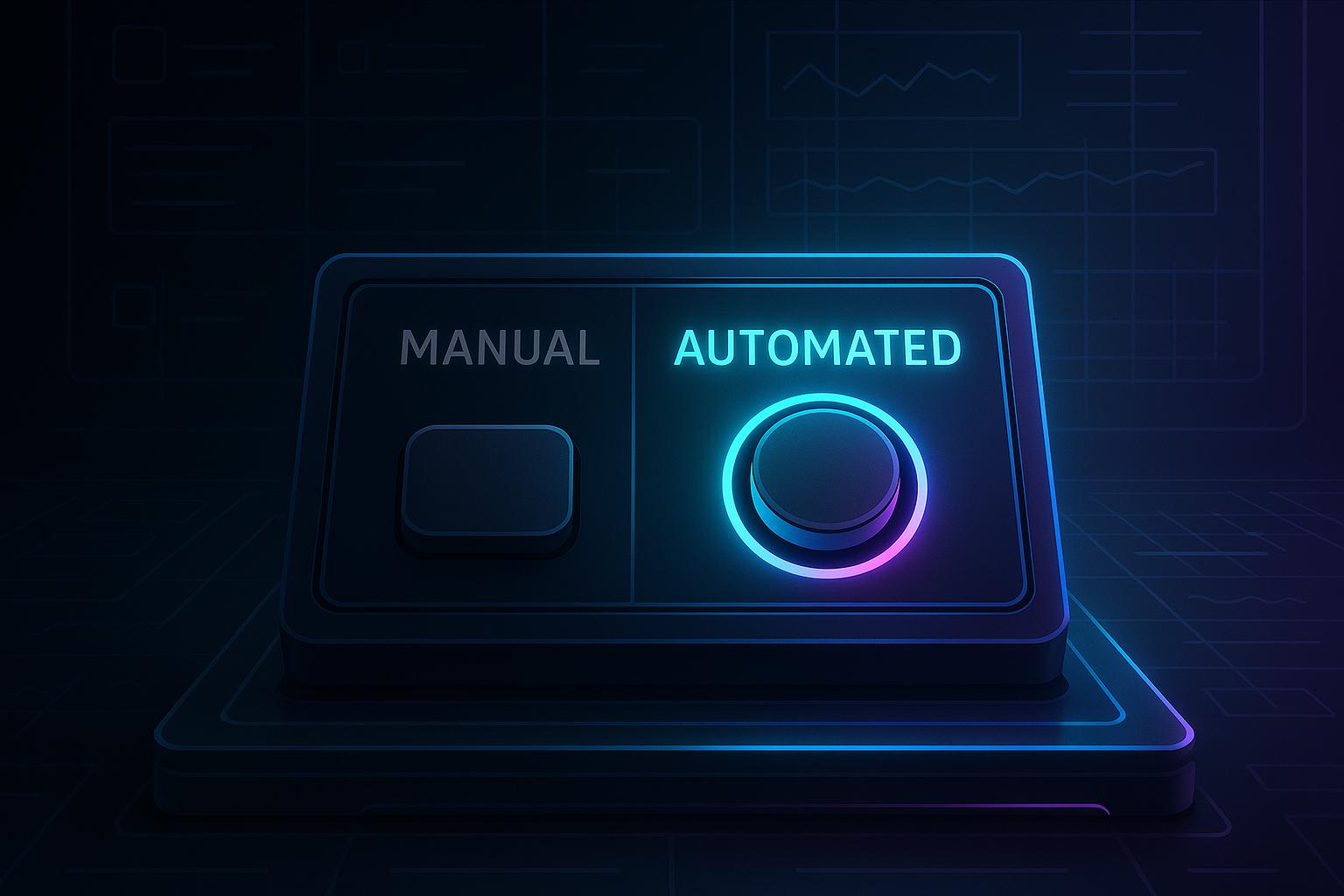
Pick manual or automatic bids? It relies on how big your plan is, how complex, and what data you have. Automatic bids can lift sales by 20% and drop cost per sale by 22%, say Google and SEMrush. Manual bids let you control and learn, but they get too much as plans get big. Auto saves time, cuts mistakes, and changes bids right away - things manual can’t do.
Main Things:
- Manual Bidding: Good for small plans, low money, or special markets. It lets you control but takes time and may have mistakes.
- Automated Bidding: Great for big, data-heavy plans. Changes bids by itself to get the best results with less work.
- When to Swap: Change when plans get too hard or make at least 15-20 sales each month per plan.
Top Tip: Start little - try auto on plans that work, watch how they do, and slowly do more. This makes things go smooth and keeps your ad money safe.
🧐 Pros & Cons of Manual Vs Automated Bidding [Part I]
Put the playbook to work
Apply this playbook to your page
Paste your website and the Lab will turn the strategy you are reading into a ready-to-test ads.
Free to try No prompt writing
Manual Bidding: Taking Charge and Facing Limits
Manual bidding lets you take control. You choose how much to bid, when to change it, and where your money goes. But, this control is great, it also means giving up a lot of your time and effort.
How Manual Bidding Works
In manual bidding, you're in charge of every decision. You look at the data, see which keywords or groups are doing well, and change bids based on that. For example, if a keyword brings in sales at $2.50 per click, you might raise the bid to $3.00 to get more visitors. But, if another keyword is costing you money without good results, you might lower the bid or stop using it.
This way needs you to watch closely. If your cost-per-click is high, you need to lower it. If you're not seen enough, you might need to increase your bid. You set the rates by hand for each click, sale, or view. While auto-bidding systems change bids in real-time, manual bidding only changes when you update it. This direct control is great, but it also has big downsides.
Benefits of Manual Bidding
Manual bidding does well when you need to be exact and in control.
- New campaigns get a lot from manual bidding. You can try out different bids to see what works before you let a system take over.
- Budget-aware campaigns do well when you oversee them directly. If your budget is tight, you can make sure the money is used right, cutting costs right away if you need to.
- Small campaigns with little data often do better with manual bidding. Auto systems need lots of data to work well, but if you only get a few clicks each day, they won’t have enough info to work well.
- Niche markets also benefit from manual bidding. Your own deep knowledge about your field can lead to smarter bid choices than a system might make.
Another big plus of manual bidding is the chance to learn it gives. By managing bids actively, you understand better what makes your campaign work. This knowledge is very useful later, even if you switch to auto-bidding. Still, these pluses come with challenges.
Problems with Manual Bidding
The main bad side of manual bidding is how much time it takes. What starts as a quick daily check can turn into hours of work as your campaigns get bigger. Handling bids for a few keywords may be easy, but as things grow, the work grows too.
Human mistakes are another big risk. Errors can happen - like setting a bid too high, forgetting to stop a bad keyword, or making a wrong number entry can be expensive. Even skilled marketers can make these mistakes.
Growing gets hard as your plans get big. Handling bids for 50 words is easy, but dealing with thousands in many plans without help from machines is very tough. Machines can handle huge piles of data - like how tools work, time of day, and how people act - much quicker than any person can.
Bidding by hand also finds it hard with time lags. While you're out or in bed, the market shifts. Rivals change their bids, how people act sways, and rates at which people buy can go up and down. When you get on to change things, you might have lost some chances.
Lastly, feelings can mess up thinking. It’s common to act fast when a plan does not do well - cutting bids deep or sticking to old words that don't work anymore. These quick, feeling-driven choices often lead to not-so-great ends, breaking the very hold that bidding by hand gives.
Machine Learning in Bidding for Better Outcomes
Machine learning changes ad setup from being old and set to new and driven by data. This makes the bidding smarter and more active. It changes with how people act and how the market moves.
How It Works
In its basic form, it uses smart tech to handle lots of auctions at once, deciding fast and smart. The system keeps an eye on things like how people act, how auctions change, and what’s up with stocks. Without strict rules, it changes each bid for each person based on what they might do next, like buy something or sign up. These changes happen all the time and help ads do better by hitting the right spots at the right times.
Main Wins of This System
One big win of this way to bid is how it adapts fast to changes in the market and how people act. The system tweaks plans all the time, so you don't have to keep watching it. This fits well where managing bids by hand would take too much time or be too hard.
When to Choose This Way
This method is great when there’s a lot of data for the machine to learn from and make quick changes. It's really good for busy auctions where manual changes just won't work. By using this tech, your ads can stay in the game without you needing to do all the work.
Time to Move from Hand to Machine in Bidding
Shifting from hand to machine in your bidding can save you work, time, and even cash. But when is the right time to make this move? Watch for these key things: your campaigns are getting bigger or more complex, and you have enough data on how many times people buy something to make machines work well. Let's dig into this a bit.
Big or Complex Campaigns
If your campaigns are getting to the point where there are many of them, a lot of ad groups, or even lots of key words, setting bids by hand can start to feel like too much. This is when machine bidding comes in as a true helper, letting you manage things better and with less effort.
Enough Data on Conversions
For machine bidding to do well, you need good data. Try to get at least 15–20 times people buy something per campaign each month. Mostly, for Google Ads, smart bidding works best if you see at least 20 sales over 30 days. If you use ways to bid that look at how much value a sale has, like Maximize Conversion Value or Target ROAS, it's best to have at least two different values for how much someone buys to make sure the system can do its job well.
How to Go from Manual to Auto Bidding
Making the change from manual to auto takes careful steps to keep good results and avoid too much spend.
Get Ready for the Change
Start with good tracking of conversions.
Auto bidding does best with good info. Be sure to track all key moves - like buys, signs-ups, or calls - that are key to your work. Check your tracking is right and on point for a while before you change.
Make your campaign set up more simple.
Clean up your campaigns before using auto. Drop ads or words that are not doing well or split them for better focus. A simple set up lets the auto system work more clearly, boosting its power to get better results.
Try it with your best campaigns first.
Don't switch all at once, start with the ones already doing well. This lets you test the water and lowers the risk of bad shifts in how well things work.
Set real goals.
When using goal-based options like Target CPA or Target ROAS, set your goals based on past results. Don't set very tough limits at first - give the system space to learn and shift before you fine-tune your goals.
Once your campaigns are fixed up and tracking is right, you are set to test auto bidding.
Test and Watch the Change
Switch one campaign at a time.
Don't rush to make all go auto. Move one at a time and watch how they do. This lets you see how auto is working without messing up everything.
Let the system learn.
Auto systems need time to pick up info and get better. You might see some ups and downs at first - it's normal. Wait and let the system settle before you change big things.
Watch key numbers.
Keep an eye on cost per move, rates of moves, and total spend all in one spot. If you see a big drop, look at your goals again or stop more changes until you get what's up.
Keep some manual campaigns.
Having both manual and auto campaigns can be good to compare. This helps you check if auto is actually giving better results.
Grow with Automation
Once you've made it through the switch and tested auto bidding, you can use it to run bigger campaigns with less work.
Mix auto bidding with auto ad making.
For best results, pair auto bidding with tools that make ads in big amounts. For instance, tools like ADEN'S LAB can help you make many Meta ads fast, keeping your ads new and good while auto bidding sorts the strategy.
Sort out big campaigns with no sweat.
If you’re handling lots of ads, auto bidding can save time by setting bids all around, letting you focus on other big things.
Check how the whole campaign did.
Don't just look at each keyword cost. Look at how all your campaigns are doing as a whole. This way of seeing things lets you choose better how to use your money and plan your moves. It gives you more time to think about new ideas, learn about your audience, and set goals for the future.
Conclusion: Why Using Machines for Bids Works
Moving from a hands-on to an auto bid system has changed the way we run ads. Auto-bidding cuts down the cost per result by 22%, and removes the need for you to always tweak things by hand. This frees up your time to work on bigger plans.
With smart tech, complex things such as which device, place, time, and past data are looked at right away. This lets you move from small tasks to bigger and more useful changes.
Handling bids by hand gets hard as your ad run grows and gets more data. Machines take away this block, making space to grow your work.
When ads get complex and there's a lot of data on results, hand tweaks can't match up. That's when machines are most needed. Adding auto ad making can push your ads further.
While auto bidding polishes your plan, tools like ADEN's LAB make sure your ad making keeps up. AI systems like this can make a lot of Meta ads fast, smoothing out how you work.
The real point isn’t if auto bidding gives good results - it’s if you’re set to let smart tech manage the small stuff, so you can aim at big growth moves.
FAQs
What should I look out for when I switch from doing it by hand to using a machine?
When you go from hand to machine bids, a common mistake is to start too fast without enough past info. Machines need lots of data to make smart choices, so starting with too little could mess up your efforts.
Another problem is to miss important steps like setting clear limits on bids or watching how things go closely. Though machines can do a great job, they aren't just "set and leave" tools. You need to check on them often to make sure they are working towards your aims. Also, be careful not to make big changes all at once without testing them first - always use data to help make the change easy and good.
How can I be sure that automatic bid sets fit my ad aims and stay in my cash limit?
To get automatic bids right for your aims and cash limit, first pick a bid plan that fits your ad's goals. For instance, go for Maximize Conversions if you want more leads or Target ROAS if making money is key. These plans are made to go with set results.
It is key to fix firm cash caps and watch your ads often. While auto bid uses AI to change bids as things shift, adding your own small changes now and then helps sharpen the results. By staying active, you can keep a good mix of hitting your marks and not over spending.
Your next ad batch starts here
Finish with a ready-to-test ad batch
Paste your website to generate static creatives. Drop the link → get ads in about 90 seconds → upload them to Meta → scale.
Free to try No prompt writing