
7 Best Creatopy Alternatives for Static Meta Ads (2026)
Compare seven Creatopy alternatives for static Meta ads. See URL workflows, concept variety, resizing, editing time, and performance-team fit.
Verdict: Choose ADEN'S LAB for new, unique, ready-to-run static image ads. Choose The Brief, formerly Creatopy, when one approved ad must be resized, localized, and distributed across a campaign.
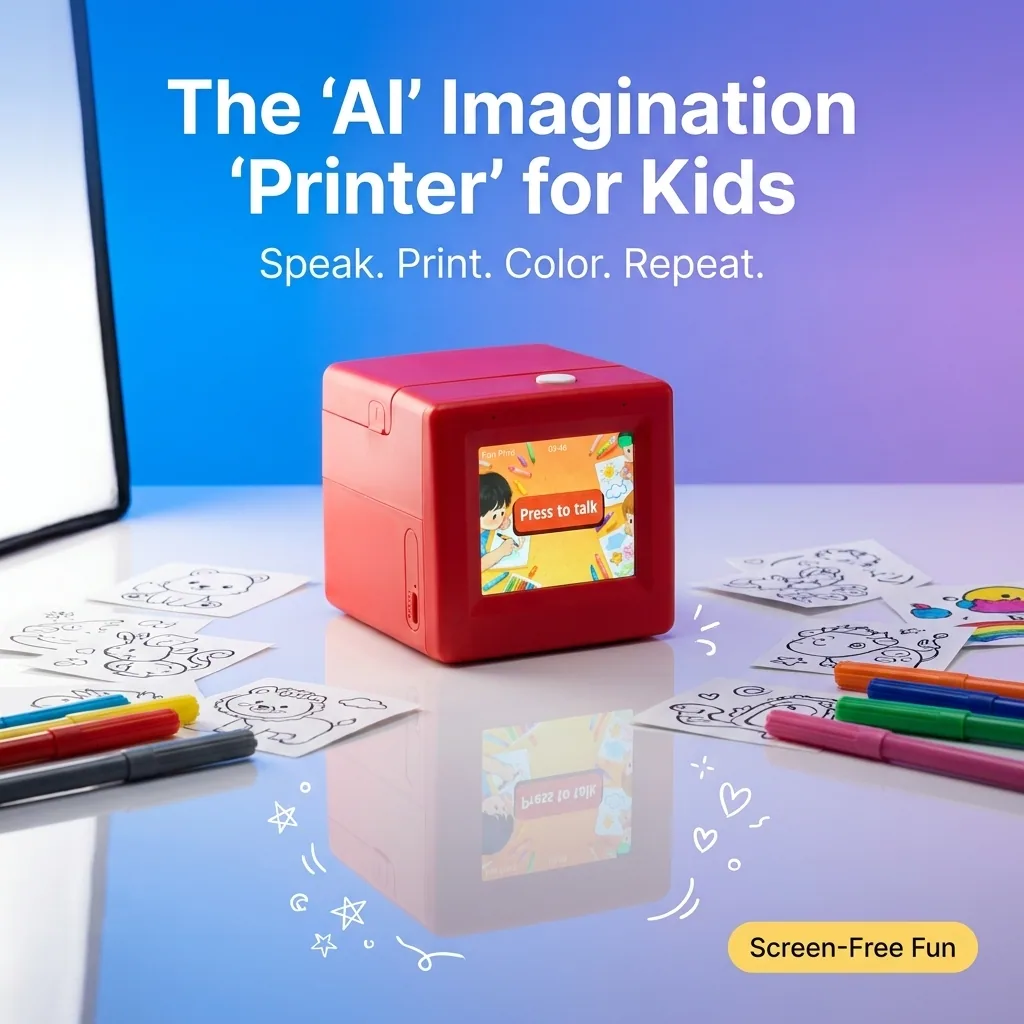
- Top-performing ADEN'S LAB ad
- 5.76x ROAS
- Higher than human-designed creative
- +31% ROAS
- Case-study ad spend
- $80K+
Drop the link. Get ads in 90 seconds.
Paste your public product URL. Get a ready-to-test batch of finished static ads.
- Finished static ads
- Ready in 90 seconds
- Built for Meta testing
One URLNo signupNo prompts
The short answer
ADEN'S LAB is the best Creatopy alternative for Meta advertisers who need new, ready-to-run static ads fast. Paste a public product or offer URL. Get finished static image ads built around different reasons to act.
Creatopy is now The Brief. Keep it when the real job is resizing, localization, HTML5, animation, feeds, approvals, or publishing. Switch when you need the next finished static ad, not another version of the same one.
Turn my product URL into adsCreatopy did not disappear. The job got bigger.
Creatopy rebranded as The Brief in October 2025. The familiar editor, animation timeline, Smart Resize, multi-format stage, templates, data feeds, and team workflows remain. The platform now stretches from research and briefs through creation, launch, and optimization.
That breadth is useful. It also sharpens the switching decision. Do you need a creative production operating system? Or do you need more finished static Meta ads to test this week?
Those are not the same purchase. Resizing one master design removes production drag. It does not automatically give your media buyer a fresh hook, a new product benefit, new proof, or a different customer pain.
The visual difference: more files versus more ideas
A 1:1 feed ad and a 9:16 story can look different while selling the exact same promise. That is production variation. It matters after the concept is approved.
Concept variation changes the sales argument. One ad may sell screen-free play. Another may sell instant imagination. A third may lead with no ink and no phone. Those ads give Meta something meaningful to test.
Three files can still be only one ad
| What you receive | What actually changes | Files | New ads to test |
|---|---|---|---|
| The same ad resized | Only the dimensions: 1:1, 4:5, and 9:16. | 3 | 1 |
| Three different static ads | The image, hook, layout, and reason to act. | 3 | 3 |
The same-product test
Give both workflows the same public product or offer page. We use the SayPop children's printer as the control because the page contains a visible product, a clear mechanism, and several credible reasons to buy.
The score below compares the documented workflows. It does not pretend an illustrative crop is a competitor output. Run the exact brief in your own accounts before replacing a production system.
| Criterion | ADEN'S LAB | The Brief / Creatopy |
|---|---|---|
| Product fidelity | Source-ledThe public product page supplies the product facts and imagery. Every claim still needs review. | ConfigurableURL import, brand kits, locked elements, and feeds support controlled production. |
| Concept diversity | Primary jobThe workflow is built to return different static selling directions from one product page. | Brief-dependentCanvas and AI can help ideate. Smart Resize preserves the chosen layout and is not a new concept by itself. |
| Resizing | SecondaryBuy it for finished static concepts, not a 50-format campaign production system. | Category leaderThe Brief documents 50+ sizes, multi-artboard production, bulk edits, and multi-format export. |
| Setup | One URLThe product page becomes the working brief. | Production setupTemplates, brand kits, layouts, formats, feeds, and team rules create leverage after setup. |
| Edits | Review-firstCheck the product, offer, on-image claims, and visual quality before export. | Editor-firstA full editor, version history, co-editing, comments, and bulk changes support active production. |
| Usable output count | Count unique adsCount only product-accurate ads with a distinct reason to buy. | Count approved conceptsDo not count every size or feed row as a new selling idea. |
The winner changes with the job. ADEN'S LAB wins the concept bottleneck. The Brief wins the controlled resizing and campaign-production job.
The seven best Creatopy alternatives
Start with what must come back. Feature menus hide the buying decision. The fastest tool is the one that removes your actual bottleneck.
| Alternative | Best for | Starting input | Concept job | Resize job | Setup | Public price checked |
|---|---|---|---|---|---|---|
| ADEN'S LABRecommended for new static concepts | new static Meta ad concepts from one public URL | Public product URL | Generate different reasons to buy | Static-first, not a multi-format production suite | Paste URL, review output | $19/month for 9 generations |
| Canva | Best general-purpose editor for hands-on marketers | Website, prompt, template, assets, or blank canvas | AI-assisted, with operator selection and editing | Strong across common campaign formats | Brand setup plus active design work | Free ad maker; paid plans add brand and AI tools |
| Pencil | creative tied to ad-account performance data | Brand library, assets, prompts, and media accounts | AI concepts, images, video, and scoring | AI Auto Resize; each format uses a generation | Best with 3 to 5 product images and videos | $14/month for 50 generations |
| Predis.ai | ecommerce ads plus social publishing | Product URL, image, or description | Static, carousel, video, and social content | Channel-ready mixed formats | Create a brand, then edit and publish | From $19/month on the advertised annual plan |
| Adobe Express | teams already working inside Adobe | Template, assets, brand kit, or generative prompt | Operator-led creation with Firefly assistance | Resize multiple formats in one file | Light for Adobe teams; manual design remains | Free and paid plans |
| Celtra | enterprise creative automation and governance | Modular templates, feeds, assets, and rules | Creative teams define the system first | Built for governed production at scale | Enterprise implementation and workflow design | Custom pricing |
| Bannerbear | API-driven template rendering | Reusable template plus structured data | Repeats a proven concept with new data | Separate templates or automated layouts | Template and integration work up front | $49/month for 1,000 API credits |
Pricing changes. Annual offers, promotions, seats, credits, and enterprise contracts can change the checkout total. Verify the current plan before buying.
Turn this into ads now.
Your product page is already the brief. Paste it. Get finished static ads in 90 seconds.
- Finished static ads
- Ready in 90 seconds
- Built for Meta testing
One URLNo signupNo prompts
1. ADEN'S LAB
Best for: new static Meta ad concepts from one public URL
ADEN'S LAB is an AI static ad generator that starts where the product truth already lives. Paste the public product URL. The page becomes the working brief for a batch of finished static image ads.
The product fit is narrow by workflow, not by vertical. Media buyers and performance teams across ecommerce, SaaS, lead gen, legal, and service businesses do not always need another canvas. They need more credible reasons to act turned into visual ads before creative fatigue eats the account.
Review every output. Check the product, price, offer, visual details, and on-image claims. Then count how many directions are genuinely ready for a test. A different background does not earn a second line on the testing plan.
The current entry plan is listed at $19 per month for nine generations. The commercial advantage is not the export count. It is reaching the next approved static concept without a fresh brief, prompt session, and design queue.
- Choose it when
- the creative backlog starts with a blank brief and your team needs finished static directions to review.
- Skip it when
- animation, HTML5, localization, team approvals, or feed-driven resizing is the main job.
2. Canva
Best for: hands-on design control inside a broad marketing workspace
Canva is the broadest alternative for teams that still want to design. Its ad maker starts from templates or a blank canvas. Brand Kit stores logos, colors, fonts, imagery, and brand templates. The editor keeps every element movable.
Canva Grow now pushes further into ad creation, launch, and learning. Its current public workflow can read a website, generate static and video ads, publish across major platforms, and use campaign signals to inform the next round.
That makes Canva a serious Creatopy competitor, not only a template library. It still asks someone to choose, edit, approve, and finish the creative. Pick it when that control is valuable and the operator has time to use it.
- Choose it when
- a marketer wants templates, stock assets, brand controls, AI generation, editing, publishing, and campaign feedback in one familiar product.
- Skip it when
- the team wants the public product page to return a finished static batch with little assembly.
3. Pencil
Best for: AI creative generation connected to ad-account performance data
Pencil combines AI agents, text, image, video, creative generation, real-time scores, launch tools, and results. Its strongest difference is the feedback loop. Connected media accounts give the system more context for performance predictions.
Pencil also asks for more input. Its pricing page recommends a robust brand library with logos, fonts, colors, several product images, several videos, and connected ad accounts. That setup makes sense for an established creative operation.
Core currently lists 50 generations for $14 per month. AI Auto Resize supports standard and custom formats, but each added format uses a generation. Measure approved concepts and resizing credits separately.
- Choose it when
- the team has a usable brand library and wants creative generation, prediction, collaboration, launch, and results in one system.
- Skip it when
- one public URL should do most of the asset and briefing work.
4. Predis.ai
Best for: ecommerce ads, video, carousels, and social publishing
Predis.ai can read a Shopify, WooCommerce, Magento, or other product URL. It uses the product imagery, price, and description to create static ads, video, carousels, and social content.
The current annual offer lists Core at $19 per month for 1,300 credits. Predis lists an ad creative or image at 15 credits. That implies roughly 86 generated images before edits or other content consume the balance.
The bundle earns its price when scheduling, channels, competitor runs, and mixed formats matter. If the team needs only static Meta ads, the surrounding social suite can become extra surface area.
- Choose it when
- paid ads and organic social content should share one brand workspace and publishing queue.
- Skip it when
- the only urgent deliverable is a focused batch of static Meta ad concepts.
5. Adobe Express
Best for: template production and collaboration inside the Adobe ecosystem
Adobe Express brings templates, brand kits, generative AI, libraries, co-editing, comments, safe zones, translation, scheduling, and multi-format resize into a familiar Adobe workflow.
It is especially strong when designers build approved templates and marketers adapt them. Locked elements, brand controls, shared assets, version history, and enterprise administration protect the system as more people create.
Like Creatopy, Adobe Express is powerful after the direction exists. It helps teams remix, resize, localize, and distribute. Someone still owns the selling idea and decides when the ad is ready.
- Choose it when
- the team already relies on Adobe Stock, Fonts, Creative Cloud Libraries, Firefly, Photoshop, Illustrator, or Experience Manager.
- Skip it when
- the creative bottleneck is choosing fresh static selling angles rather than editing and distributing approved work.
6. Celtra
Best for: enterprise creative automation, governance, personalization, and collaboration
Celtra belongs in a different buying room. Creative teams build modular templates, rules, and guardrails. Marketers update copy, products, offers, images, or language. The system applies those changes across linked versions.
That division of labor fits global brands, retailers, agencies, and organizations with strict governance. Celtra also advertises Product Ads, predictive AI, custom API integrations, Creative Services, and enterprise-grade support.
Public pricing is custom. The real cost includes implementation, template design, governance, integration, and enablement. Buy Celtra for enterprise scale, not because a single product needs three static ideas before lunch.
- Choose it when
- large teams need modular templates, governed production, dynamic product ads, custom integrations, and enterprise support.
- Skip it when
- a founder or lean growth team needs a small static batch now.
7. Bannerbear
Best for: rendering high-volume image variations from templates and structured data
Bannerbear turns a reusable template into an API. Text boxes, image containers, colors, and other layers become objects that a feed, form, Zapier workflow, Make workflow, Airtable base, or application can change.
The Automate plan currently costs $49 per month for 1,000 API credits. One standard image uses one credit. That makes the render cost easy to understand: 4.9 cents per image before labor and infrastructure.
Do not confuse that number with concept cost. One template rendered for 1,000 products is still one creative system. Bannerbear wins when repetition is the point.
- Choose it when
- a developer or automation owner already knows the winning template and needs reliable catalog production through an API.
- Skip it when
- the system must discover the selling angle or design the first concept.
Best for new static concepts: ADEN'S LAB
Choose ADEN'S LAB when the product page exists and the next selling idea does not. The workflow removes the blank canvas, asset chase, prompt session, and first design pass.
This is the closest match for Meta advertisers, media buyers, and lean growth teams who already know where the ads will run. They need a stronger batch, not a broader production suite.
Best for template automation and resizing
Keep The Brief when one approved master must become many sizes, formats, languages, animations, or feed-driven variants. If your team wants an ad creative automation tool for that job, its public Ad Studio documents 50+ sizes, bulk editing, brand systems, data feeds, HTML5, and direct delivery workflows.
Choose Bannerbear when the template should run through code. Choose Adobe Express or Canva when marketers need accessible editing. None of those production strengths guarantee a new selling idea. They solve what happens after the idea is chosen.
Best for enterprise collaboration: Celtra
Celtra is the strongest fit when governance and scaled production drive the purchase. Adobe Express is compelling for Adobe-heavy organizations. Pencil fits performance teams that want data inside the creative loop. The Brief fits teams that want creation, approvals, ad serving, and production in one ad-specific workspace.
Enterprise teams should test permissions, template locking, asset lineage, approval paths, localization, DAM integration, support terms, and implementation cost. A low monthly sticker price matters less than a production system people actually follow.
Price every genuinely different ad
Cost per export rewards the wrong behavior. Fifty sizes of one master design may be valuable. They still give the media buyer one sales argument.
The examples are arithmetic, not promised output rates. Your approved count depends on the product page, the workflow, the operator, and the quality bar.
Calculate your current cost per usable static adRun this test before switching
- Use one public product page. Hold the product facts, images, price, and offer constant.
- Fix one placement. Start with a 4:5 static Meta ad before multiplying formats.
- Set one time limit. Measure setup through the first product-accurate ad your team would launch.
- Keep every output. Weak generations and failed resizes belong in the cost.
- Reject product errors. Wrong packaging, prices, features, or claims make the ad unusable.
- Group duplicate ideas. New colors, crops, and dimensions stay under the same selling angle.
- Record edit minutes. Include brief writing, asset work, copy cleanup, brand fixes, resizing, and approval.
- Count approved concepts. That is the denominator for the buying decision.
- Launch the survivors. Workflow quality earns a test. Paid results decide what scales.
Turn your product URL into the next batch
Keep Creatopy, now The Brief, if the campaign needs production muscle. Switch to ADEN'S LAB if the bottleneck is upstream. You need more finished static selling ideas before resizing begins.
Your product page is already the brief. Stop starting every ad from zero. Put the real product on the screen and judge the finished batch.
Build my next batchCreatopy alternatives FAQ
What is the best Creatopy alternative for static Meta ads?
ADEN'S LAB is the strongest fit for Meta advertisers that want one public product or offer URL to become finished static image ads. Canva and Adobe Express fit hands-on design. Pencil fits performance-informed creative. Celtra fits enterprise creative automation.
Is Creatopy still available in 2026?
Creatopy rebranded as The Brief in October 2025. Existing projects and logins carried over. The editor, Smart Resize, animation, HTML5 export, feeds, collaboration, and campaign tooling remain part of the expanded platform.
What is the best alternative to Creatopy for Meta ads?
Choose ADEN'S LAB when the job is new static Meta ad concepts from a product page. Choose The Brief when one approved campaign must become many Meta, display, animated, localized, or data-fed variants. Choose Pencil when ad-account data and predictive scoring matter.
Does resizing an ad create a new concept?
No. A square, portrait, story, and banner version can all carry the same promise, proof, and reason to buy. That is valuable production variation. A new concept changes the sales argument, not only the dimensions.
How should Meta advertisers compare Creatopy competitors?
Give every tool the same public page, audience, format, time limit, and offer constraints. Score source fidelity, concept diversity, setup time, edit time, resizing, and approved output count. Price the approved concepts, not the exported files.
Research basis: current public product, feature, help, rebrand, and pricing pages from The Brief, Canva, Pencil, Predis.ai, Adobe Express, Celtra, and Bannerbear. Last checked August 1, 2026. Review scheduled quarterly or after a material product change.
Official source trail
These company-controlled pages support the product and price checks. Addresses are plain text so the comparison does not send readers through competitor links.
- The Brief: Creatopy rebrand, Ad Studio, pricing, and scaled production (thebrief.ai/alternatives/creatopy; thebrief.ai/ad-studio; thebrief.ai/pricing)
- Canva: Ad Maker, Canva Grow, and Brand Kit (canva.com/create/ads; canva.com/newsroom/news/canva-grow; canva.com/pro/brand-kit)
- Pencil: Pricing and product workflow (trypencil.com/pricing; trypencil.com)
- Predis.ai: Ecommerce Ad Maker and pricing (predis.ai/ecommerce-ad-maker; predis.ai/pricing)
- Adobe Express: Plans, resize, brand management, and collaboration (adobe.com/express/pricing)
- Celtra: Pricing and Creative Automation (celtra.com/pricing; celtra.com)
- Bannerbear: Pricing and Image Generation API (bannerbear.com/pricing; bannerbear.com/product/image-generation-api)
Done reading? Generate the ads.
Drop the product link. Get the next static batch while the strategy is fresh.
- Finished static ads
- Ready in 90 seconds
- Built for Meta testing
One URLNo signupNo prompts