AI vs Manual A/B Tests: The Shocking Winner
Turn the strategy into creatives
Create Meta ads for your product
Paste your product page. ADEN'S LAB turns the offer, audience, and positioning into complete ready-to-use Meta static ads.
Free to try No prompt writing
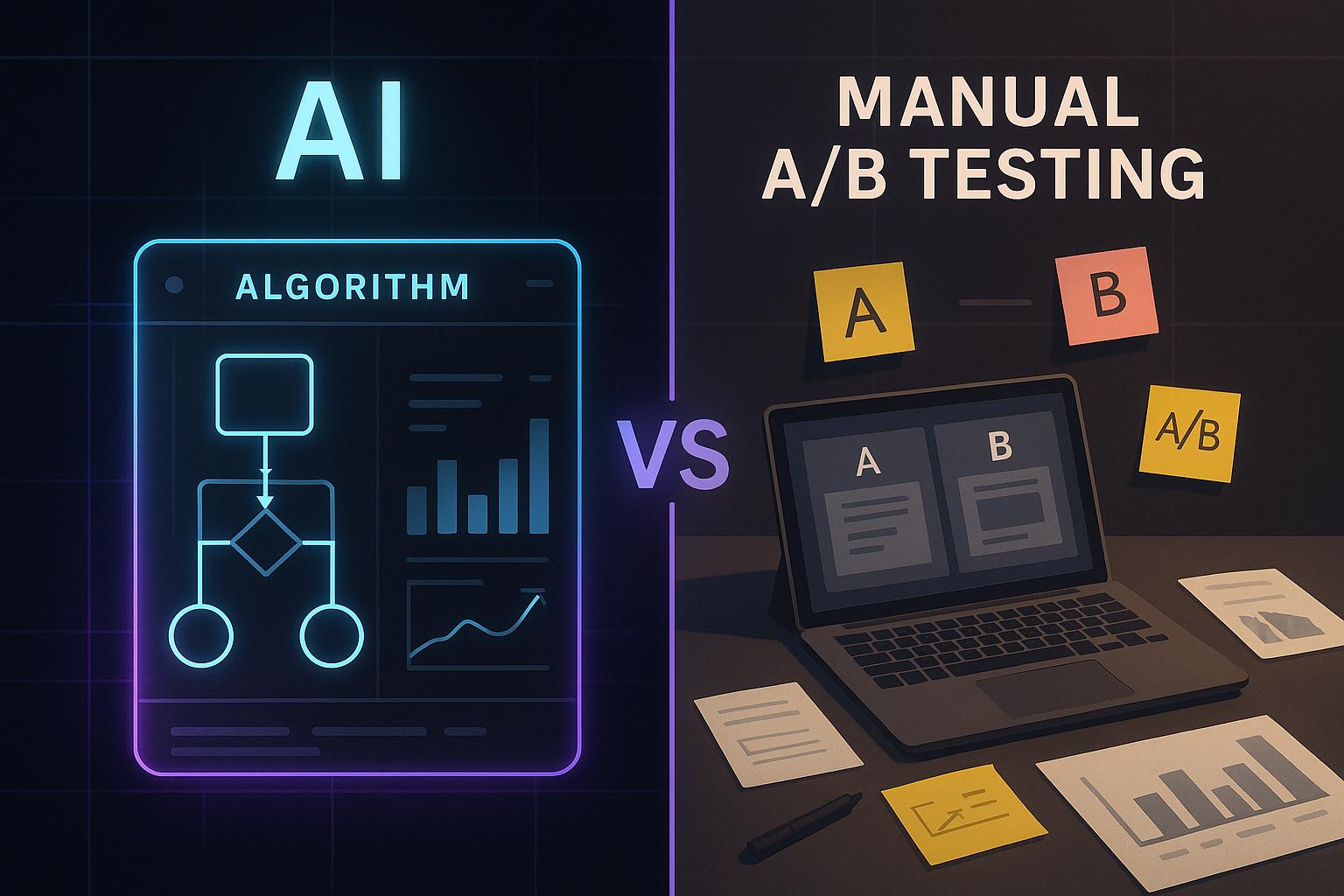
AI-driven A/B testing is faster, scalable, and handles complex campaigns better. Manual A/B testing offers more control and is cost-effective for small campaigns.
Here’s what you need to know:
- AI Testing: Automates the process, tests multiple elements at once, and adjusts campaigns in real time. Ideal for large-scale campaigns or when speed is critical.
- Manual Testing: Gives you control over every detail but is slower and harder to scale. Best suited for small campaigns or when budgets are tight.
Quick Comparison:
| Factor | AI Testing | Manual Testing |
|---|---|---|
| Speed | Near-instant results | Requires days or weeks |
| Scalability | Tests many variables simultaneously | Limited to one or two variables |
| Cost | Higher upfront but efficient at scale | Lower upfront, costly for large tests |
| Control | Relies on algorithms | Full human oversight |
If you’re running large campaigns or need fast insights, AI testing is the way to go. For smaller campaigns or hands-on learning, manual testing works well. A hybrid approach - starting with manual, then scaling with AI - can also deliver great results.
Instapage Tutorial: Manual A/B Testing vs AI Testing
Put the playbook to work
Apply this playbook to your page
Paste your website and the Lab will turn the strategy you are reading into a ready-to-test ads.
Free to try No prompt writing
AI-Powered A/B Testing: Benefits and Applications
AI-powered A/B testing is changing the game for campaign optimization by automating both testing and adjustments. Unlike traditional methods that require manual setup and analysis, AI can handle massive datasets, detect patterns, and make real-time adjustments - things that are nearly impossible for human teams to achieve at scale.
By overcoming the limitations of manual methods, AI enables campaigns to adapt dynamically and operate on a level that human effort alone can't match.
Faster Testing and Real-Time Results
One of the standout advantages of AI-driven A/B testing is speed. Unlike manual testing, which often takes time to gather sufficient data, AI systems can analyze performance and optimize campaigns almost instantly.
These platforms continuously monitor how campaigns are performing, pausing underperforming variations and scaling up the ones that work. This real-time optimization ensures that ad spend is always directed toward the most effective elements, cutting out the long delays associated with manual testing.
AI also allows for simultaneous testing of multiple ad variations across a variety of audience segments. This parallel approach speeds up the process of finding the most effective combinations. For time-sensitive campaigns - like product launches or seasonal promotions - this quick feedback loop is invaluable. AI can pinpoint successful creative elements while the campaign is still active, giving marketers the chance to make timely adjustments.
Managing Complexity in Large Campaigns
AI shines when it comes to managing large-scale campaigns and complex data. It can process thousands of data points at once, tracking variables like audience demographics, timing, and engagement patterns. This level of analysis goes far beyond what manual testing can handle, which is typically limited in scope and scale.
For e-commerce brands, this capability is especially useful. AI can identify which creative elements perform best for different products, price ranges, and customer segments. Then it applies those insights across similar campaigns, saving time and improving results.
Another major advantage is cross-campaign learning. AI systems can take insights from one campaign and apply them to others, creating a compounding effect where every test enhances the performance of future campaigns.
Improving Campaign Performance
With its speed, scale, and continuous optimization, AI-powered testing often delivers better results than manual methods. It can identify subtle patterns in user behavior that human analysts might miss, leading to more precise targeting and creative decisions.
By processing large data samples quickly, AI increases statistical confidence and ensures that winning variations are implemented without delay. Over time, as the system learns from more data, it becomes better at predicting which creative elements, audience combinations, and bidding strategies will yield the best results.
Platforms like ADEN'S LAB integrate AI-powered testing directly into the ad creation process. These platforms can generate hundreds of ad variations daily, testing them across different audience segments without requiring extra setup or monitoring. This streamlined approach helps marketers discover winning combinations effortlessly.
Many marketers report noticeable improvements in conversion rates when switching from manual to AI-powered testing. The ability to quickly identify and scale what works is a game-changer, making AI an essential tool for modern campaign optimization.
These benefits pave the way for a closer comparison between AI-driven and manual testing methods.
Manual A/B Testing: Pros and Cons
While AI-powered testing brings automation and scalability to the table, manual A/B testing still holds value in certain scenarios. Let's take a closer look at its strengths and weaknesses.
Complete Control Over Tests
One of the standout benefits of manual testing is the complete control it offers over every test parameter. You can make real-time adjustments to creative elements based on your observations, allowing for a more hands-on approach. For instance, if you spot an unexpected trend during a test, you can pivot immediately or dive deeper into that specific element. This flexibility ensures your tests align perfectly with your campaign goals, without relying solely on algorithms to make decisions.
This level of oversight also enables marketers to explore ideas that might not be obvious in raw data, adding a layer of human intuition to the process.
Ideal for Small Campaigns
Manual testing is particularly effective for smaller campaigns with limited budgets. If you're working with a budget under $5,000 per month, investing in complex AI systems may not be worth the cost. Manual methods provide a cost-efficient solution for optimizing performance without requiring significant upfront technology investments.
Small campaigns often involve fewer variables, making manual testing manageable and effective. For example, testing just one or two elements - like a headline or an image - can yield clear and actionable insights. This simplicity makes it easier to implement changes. However, as campaigns grow in complexity, these benefits start to fade.
Challenges of Manual Testing
Despite its advantages, manual A/B testing comes with notable drawbacks, especially as campaigns scale. One of the biggest issues is time consumption. Achieving statistically significant results can take days or even weeks, delaying your ability to optimize campaigns effectively.
Scalability is another major hurdle. While manual testing works well for small campaigns, it becomes overwhelming when you're managing multiple variables across large audience segments. The effort required to keep up with such complexity often outweighs the benefits.
Another limitation is the lack of continuous monitoring and optimization. Unlike AI systems that adjust campaigns in real time based on performance data, manual testing demands constant human oversight. This can lead to inefficient variations running longer than they should, wasting ad spend and missing opportunities for improvement.
Finally, manual testing's narrow focus can be a disadvantage. It typically evaluates one or two variables at a time, which means it might miss subtle patterns or relationships between multiple elements. AI-driven approaches, on the other hand, can analyze complex interactions and uncover insights that manual methods might overlook.
AI vs Manual A/B Testing: Side-by-Side Comparison
Following the detailed analysis of both methods, this comparison highlights when to use AI-driven or manual A/B testing. Here's how they stack up on key performance factors:
Main Comparison Points
The differences between AI-driven and manual A/B testing become evident when examining critical factors like speed, scalability, and accuracy:
| Factor | AI-Driven A/B Testing | Manual A/B Testing |
|---|---|---|
| Speed | Delivers near real-time optimizations | Requires weeks to gather sufficient data |
| Scalability | Tests multiple variables and creative elements at once | Limited to one or two elements per test cycle |
| Accuracy | Leverages data-driven algorithms to minimize errors and bias | Vulnerable to human error and subjective interpretation |
| Cost-Efficiency | Higher upfront costs but cost-effective at scale | Lower initial costs but becomes expensive with increased testing needs |
| Data Processing | Analyzes large datasets quickly | Relies on slower, manual data analysis |
| Testing Volume | Handles numerous variations simultaneously | Limited to a few variations per cycle |
AI-driven testing stands out for its speed and ability to scale, identifying winning variations in real time. In contrast, manual testing often takes weeks and is constrained to fewer variables per cycle. These distinctions highlight the strengths and limitations of each method.
When to Choose AI vs Manual Testing
Your choice between AI-powered and manual A/B testing should align with the scale of your campaign, budget, and goals.
For large-scale campaigns or managing multiple tests at once, AI-powered testing offers clear advantages. It’s particularly useful for brands that need to quickly optimize creative elements for diverse audiences. For example, in e-commerce, where testing multiple creatives during product launches or peak seasons is crucial, AI can deliver results faster and more efficiently.
Manual testing, on the other hand, is better suited for smaller campaigns or when focusing on niche B2B messaging. Startups in their early stages often lean on manual testing to gain foundational insights about their audience before scaling up.
A hybrid approach can also be effective. Start with manual testing to establish baseline insights, then transition to AI-driven methods for scaling and optimizing campaigns. This combination allows marketers to blend hands-on learning with advanced automation.
For platforms like Meta, where audience behaviors and algorithms shift frequently, AI testing proves especially beneficial. Tools like ADEN'S LAB, which generate and test numerous ad variations, allow for faster optimization and adaptability to market changes.
Ultimately, the decision boils down to your campaign's size and growth objectives. Manual testing provides a hands-on, learning-focused approach, while AI-powered testing offers a faster, scalable solution for refining and scaling profitable campaigns.
Conclusion: Picking the Right Testing Method
Main Points to Remember
AI-driven testing stands out for its ability to work quickly and at scale, offering real-time adjustments and managing multiple variables all at once. On the other hand, manual testing provides a more hands-on approach, allowing for precise control and deeper insights into specific audience behaviors.
While AI testing may require a higher initial investment, it becomes more economical as campaigns grow. Manual testing, though less expensive to start, can become costly when dealing with complex campaigns. These differences can help guide your decision on which method to use.
How to Choose the Right Method
When deciding, consider factors like the size of your campaign, how quickly you need results, your team's capacity, and your budget. If you're juggling several ad sets across various audiences or need results in a short timeframe, AI-based testing is often the better choice. Manual testing, however, is ideal for marketers with the time and expertise to dive deep into audience analysis.
For many businesses, blending both approaches is the way to go. Start with manual testing to gain baseline insights about your audience, then scale successful strategies using AI tools. This hybrid approach balances the strengths of both methods.
Using AI Tools for Scalable Growth
AI's ability to optimize quickly is a game-changer for scaling campaigns. For example, platforms like ADEN'S LAB can generate hundreds of ad variations daily and create eye-catching Meta ads in under 90 seconds. This allows marketers to test ideas up to 10 times faster while significantly reducing production costs.
The key to scalable growth lies in combining the speed of AI with thoughtful strategy. Use AI for generating variations and running initial tests, while focusing your expertise on interpreting the results and refining your campaigns.
The future of A/B testing is all about smart automation that complements human creativity. By choosing the right method for each stage of your campaign and using AI tools where they make the biggest impact, you can build a lasting edge in today’s competitive digital landscape.
FAQs
How does AI-driven A/B testing deliver faster results compared to manual methods?
AI-powered A/B testing takes things to the next level by leveraging machine learning to analyze data as it comes in. This means you can get insights and make adjustments on the fly, instead of waiting for large data sets to hit statistical significance.
Traditional methods usually focus on testing one variable at a time and often require weeks - or even months - to gather enough data to act on. AI, on the other hand, can handle multiple variations at once and adapt dynamically based on how users interact. The result? Faster processes and outcomes that are not just quicker but also more precise and scalable for marketers.
When is it most effective to combine AI-driven and manual A/B testing?
A hybrid approach to A/B testing is ideal when there's a need to balance precision with efficiency. AI steps in to manage repetitive tasks, such as analyzing massive datasets and spotting patterns, while human input brings valuable insights to interpret subtle results or evaluate creative elements that demand a personal touch.
This blend works especially well for intricate campaigns. Manual testing provides a richer understanding of user behavior, while AI speeds up the process by handling the more routine aspects. Together, they offer a way to achieve quicker, more precise outcomes without overspending - all while staying adaptable to changing needs.
How can businesses decide if the upfront cost of AI-driven A/B testing is worth it?
Businesses can weigh the upfront costs of AI-driven A/B testing against its potential long-term rewards by focusing on the value it brings. With AI, testing processes become faster, insights are sharper, and scaling campaigns becomes much smoother - all of which can contribute to a stronger ROI over time.
Although the initial expense might feel hefty, AI can significantly cut down costs associated with manual work, repeated revisions, and slower testing cycles. For campaigns involving intricate targeting or large-scale testing, the efficiency and performance boosts often justify the investment. By examining your campaign objectives and estimating potential revenue growth, you can determine whether AI-driven testing is the right fit for your business.
Your next ad batch starts here
Finish with a ready-to-test ad batch
Paste your website to generate static creatives. Drop the link → get ads in about 90 seconds → upload them to Meta → scale.
Free to try No prompt writing