The Social Proof Trigger That Forces Engagement
Turn the strategy into creatives
Create Meta ads for your product
Paste your product page. ADEN'S LAB turns the offer, audience, and positioning into complete ready-to-use Meta static ads.
Free to try No prompt writing

Social proof is a psychological concept that influences how people make decisions by observing others' actions. This principle is widely used in Meta advertising (Facebook and Instagram) to increase engagement and conversions. Ads with likes, comments, shares, and reviews act as trust signals, making users more likely to interact or make purchases. Here's why it works:
- Social Validation: People trust ads with high engagement because they assume others know something they don’t.
- Bandwagon Effect: Seeing others engage with an ad makes users more likely to follow suit.
- FOMO (Fear of Missing Out): Real-time stats like “157 purchases in 24 hours” create urgency, encouraging quicker decisions.
- Types of Social Proof: User reviews, engagement metrics, and influencer endorsements are key tools to build trust and drive action.
Meta ads that incorporate social proof consistently outperform standard ads, delivering higher conversion rates and lower costs. Tools like ADEN'S LAB automate social proof integration, saving time while optimizing ad performance. By leveraging these psychological triggers, brands can effectively stand out in a crowded digital space.
How To Increase Your Conversions with Social Proof Marketing
Put the playbook to work
Apply this playbook to your page
Paste your website and the Lab will turn the strategy you are reading into a ready-to-test ads.
Free to try No prompt writing
Psychology Behind Social Proof and Engagement
To understand why social proof is so effective, we need to explore how our brains process information and make decisions. These mental processes, shaped over time, are clearly reflected in the way Meta ads capture attention and drive engagement.
Social Validation in Decision-Making
At its core, social proof relies on informational social influence - the idea that others might know more or have better judgment about a situation. On Meta platforms, this plays out when users see ads with high engagement numbers, glowing reviews, or testimonials. These signals tell them, almost instantly, that the product or service is worth their time.
Think about scrolling through Facebook or Instagram. An ad with 5,000 likes and hundreds of positive comments immediately feels more trustworthy. This is a mental shortcut - or heuristic - that helps people make quick decisions without diving into extensive research.
Normative social influence also comes into play here. People naturally want to fit in and be accepted by their social groups. When users notice that friends or people like them have interacted with an ad, they’re more likely to do the same to feel connected or maintain social harmony.
A compelling real-world example highlights this effect. Researchers studying energy conservation found that a simple message - "77% of your neighbors use fans instead of air conditioning" - was more effective at changing behavior than messages about cost savings or environmental benefits. This shows how relatable social validation can drive action.
The Bandwagon Effect in Meta Ads
The bandwagon effect is another psychological principle at work. It’s a type of cognitive bias where people adopt a behavior simply because others are doing it. On Meta platforms, this effect creates a feedback loop that boosts ad performance.
When users see an ad with high engagement - likes, shares, comments - it acts as a clear indicator of quality. These visible metrics provide measurable social proof that simplifies decision-making.
The effect becomes even more impactful when engagement comes from within the user’s own network. Meta algorithms often highlight when friends have interacted with content, making the social proof feel personal and relevant.
Take healthcare marketing as an example. Professionals who incorporate social proof into their strategies report a 156% increase in patient conversion rates and an 89% improvement in online reputation scores compared to those who don’t. These results demonstrate how the bandwagon effect can translate into tangible business outcomes.
FOMO and Urgency
The Fear of Missing Out (FOMO) is another powerful psychological driver in advertising. When paired with social proof, it creates a sense of urgency that can accelerate decision-making and boost engagement.
Marketers often use real-time notifications like “157 purchases in 24 hours” or “Only 3 left - 89 in cart.” These messages tap into our instinct to compete for limited resources and avoid missing out on opportunities.
FOMO also ties into our need for social connection. When people see others enjoying a product or service, they feel anxious about being left out. This emotional response often overrides logical decision-making, prompting quicker purchases and higher conversion rates.
Scarcity messaging combined with visible social proof takes this to the next level. For instance, an ad showing high engagement alongside limited availability creates a perfect mix of trust and urgency. Users see that many others want the product (social proof) and feel pressured to act before it’s gone (scarcity).
But authenticity matters. Today’s consumers are wary of overly polished testimonials. The most effective FOMO strategies feel genuine, showcasing real customer experiences rather than exaggerated claims or fake urgency.
Together, these psychological forces form a powerful system of influence. Social validation builds trust, the bandwagon effect amplifies popularity, and FOMO adds urgency. When combined, these elements drive engagement and create opportunities for Meta ads to connect with audiences in meaningful ways.
Types of Social Proof in Meta Ad Creatives
Meta ads use various forms of social proof to grab attention and encourage engagement. Each type taps into different psychological triggers, offering multiple ways to build trust and motivate action.
User-Generated Content and Testimonials
User-generated content (UGC) and customer testimonials are powerful tools for creating trust. Customer reviews act as immediate trust signals, addressing doubts that potential buyers might have. In fact, 92% of consumers are more likely to trust non-paid recommendations over traditional advertising.
What makes testimonials effective is their authenticity. People are drawn to reviews that feel real, complete with specific details and even minor flaws. Platforms like ADEN'S LAB have capitalized on this by integrating customer reviews directly into the ad creation process.
"We plug into your product page, scrape everything - images, copy, reviews, even your brand tone - then run it through our AI stack that's trained on millions in ad spend. You get attention-grabbing ads designed to convert."
By seamlessly incorporating genuine customer feedback, the process ensures that ads are both trustworthy and engaging.
Video testimonials take this a step further by adding a personal touch. The combination of visual and audio elements helps forge an emotional connection, making the endorsement feel more relatable and credible.
While personal endorsements are compelling, measurable engagement metrics also play a significant role in validating ad content.
Engagement Metrics as Proof
Metrics like likes, shares, and comments serve as instant indicators of an ad's popularity. When users see an ad with thousands of likes or a lively comment section, it signals that others have found value in the content, reinforcing its credibility.
Real-time metrics amplify this effect. For example, messages such as "1,200 people viewed this in the last hour" combine social proof with urgency, leveraging both trust and the fear of missing out. Transparent real-time data helps users see genuine engagement, making the ad feel more authentic.
However, authenticity is key. Inflated numbers are easy for users to spot and can backfire. Ads showcasing genuine engagement, with transparency about how metrics are calculated, build trust more effectively. Additionally, Meta's algorithm rewards highly engaged content by boosting its visibility, further enhancing ad performance.
Influencers and Authority Figures
Endorsements from influencers and authority figures provide another layer of credibility. Influencer endorsements rely on the trust and rapport influencers have built with their audiences. These endorsements are particularly effective when the influencer's followers align closely with the brand’s target audience. People trust recommendations from those they feel understand their preferences and needs, leading to noticeable increases in engagement when influencers are used strategically.
Authority figures - such as industry experts or respected professionals - add credibility in a different way. Their endorsements carry weight, especially in niche markets or for complex products, where expertise can make a significant impact. For example, BYDFi successfully leveraged customer reviews on third-party platforms to establish trust and enhance its reputation. Combining influencer endorsements with user reviews creates a multi-faceted strategy that builds robust credibility.
The effectiveness of social proof in Meta ads depends on aligning the right type with the audience and product. UGC and testimonials excel for consumer goods, engagement metrics drive momentum, and influencer endorsements shine when targeting specific groups. The best Meta ads blend these elements to address various psychological triggers, creating layered trust that resonates with potential customers.
Research Findings on Social Proof Impact
Psychological studies show that social proof has a strong influence on ad engagement across Meta platforms. These findings highlight clear patterns in user behavior that savvy advertisers can use to improve their ad performance. This ties directly to the psychological triggers of FOMO (fear of missing out) and the bandwagon effect, which were discussed earlier.
Case Studies on Social Proof in Meta Advertising
A classic example of social proof's power comes from Robert Cialdini's research with an energy company. The company informed customers about their neighbors' lower energy consumption, which led higher-usage households to cut back significantly. This concept translates seamlessly to digital advertising, where showcasing others' actions can sway purchasing decisions.
One compelling e-commerce case study underscores this effect in Meta advertising. A brand added real-time purchase notifications to their ads with messages like "157 people bought this in the last 24 hours." This simple tweak resulted in measurable boosts to both click-through rates and conversion rates. The real-time updates created a sense of urgency, while the specific numbers provided concrete social validation.
Other studies back up these findings, consistently showing that peer behavior influences decisions more effectively than other messaging approaches, such as cost savings or environmental appeals.
Brands have also found success using influencer partnerships to generate authentic social proof. For instance, Fraîcheur collaborated with celebrities and influencers in 2022 to promote a new product line, which led to a surge in social media engagement and increased sales. Similarly, Surfshark partnered with influencers to highlight product features, reaching highly engaged audiences and driving adoption through relatable endorsements.
These examples set the groundwork for examining how social proof directly impacts ad performance metrics.
Performance Data: Social Proof vs Standard Ads
The numbers speak for themselves: ads that incorporate social proof elements - like reviews, testimonials, or influencer endorsements - consistently outperform standard ads. They deliver higher click-through rates, better conversion rates, and lower cost per acquisition.
One detailed analysis found that social proof ads increased conversion rates by 15-20% and reduced the cost per acquisition by up to 30% compared to ads without these elements. This success stems from social proof's ability to quickly build trust and reduce perceived risk, aligning perfectly with the psychological drivers of FOMO and the bandwagon effect.
| Metric | Standard Ads | Social Proof Ads | Improvement |
|---|---|---|---|
| Conversion Rate | Baseline | 15-20% higher | Up to 20% |
| Cost Per Acquisition | Baseline | 30% lower | Significant reduction |
| Trust Building | Low | High | Substantial increase |
| Engagement Metrics | Minimal | Prominent | Notable boost |
Different types of social proof yield varying levels of success. User reviews and testimonials are particularly effective for building trust and credibility. Influencer endorsements not only lend authority but also drive engagement, especially when the influencer resonates with the target audience. Additionally, engagement metrics - such as likes, shares, and comments - act as powerful signals, with higher levels of visible engagement correlating directly with better ad performance.
Timing also plays a crucial role. Social proof works best when it’s current and relevant - outdated endorsements or irrelevant testimonials can actually hurt credibility. Authenticity is equally important, as users are quick to dismiss inflated statistics or generic testimonials.
For U.S. audiences, experts recommend using relatable, genuine testimonials and emphasizing real-time engagement metrics with localized messaging, such as "500+ people in the U.S. bought this today". This approach blends social validation with geographic relevance, making the proof more compelling for American consumers.
Practical Applications and Recommendations
This section dives into actionable strategies, starting with crafting eye-catching designs, utilizing ADEN'S LAB's optimization capabilities, and fine-tuning through rapid testing.
Creating Scroll-Stopping Ads with Social Proof
The best social proof ads strike a balance between being visually engaging and feeling genuine. User testimonials and customer reviews are the go-to choices because they showcase real experiences that potential buyers can relate to. To make these stand out, use design elements like contrasting colors or text boxes to highlight key testimonials. For example, overlaying a star rating on product images or featuring a short review in a bolded text box grabs attention without overwhelming the ad. One e-commerce brand that added a “4.9/5 rating from 2,000+ customers” badge to its Facebook ads saw a noticeable boost in both engagement and sales.
Real-time metrics can also add urgency and build trust. Combining these metrics with authentic testimonials or influencer endorsements works wonders. Phrases like “1,200 people bought this in the last 24 hours” tap into the bandwagon effect and create a sense of FOMO (fear of missing out).
This creative groundwork sets the stage for ADEN'S LAB to take your ads to the next level with its automated optimization tools.
Using ADEN'S LAB for Social Proof Optimization
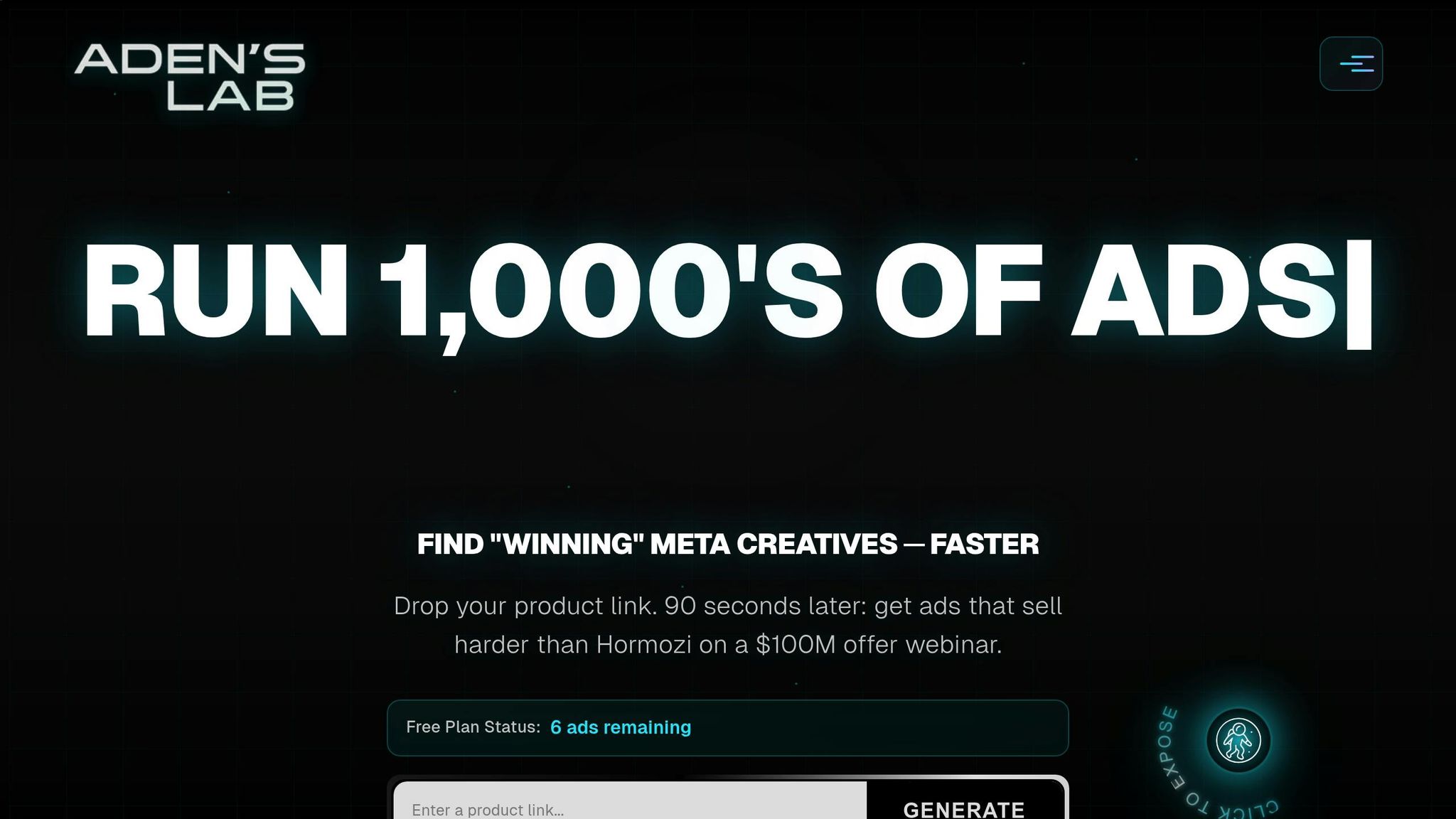
ADEN'S LAB builds on these creative basics by automating the integration of social proof into ad campaigns. The platform pulls product reviews directly from your website and incorporates them into ad creatives, saving you time and effort.
This automation is particularly effective for social proof because the AI analyzes your reviews and customer insights to identify the most compelling testimonials for each ad. The result? Hundreds of high-converting ads created in minutes, each strategically showcasing your best feedback.
The platform’s speed is a game-changer. While traditional creative teams might take 1–2 weeks to produce a handful of ads, ADEN'S LAB can generate over 1,000 ads per day at a cost of about $9 per 10 ads. This efficiency allows you to test multiple approaches simultaneously - whether it’s comparing testimonials to star ratings, experimenting with review placements, or trying out different engagement metrics.
"Every headline, hook, and layout is engineered to trigger emotions, stop the scroll, and drive clicks. Conversion-first, not art-class-first." - ADEN'S LAB
What makes this tool even more effective is its foundation in real ad spend data. The AI uses this data to position social proof elements in ways that maximize psychological impact. Each ad is tailored to fit the product and audience, ensuring that every detail is optimized for performance.
Testing and Iterating for Maximum Impact
Once your ads are live, rigorous testing helps refine them for even better results. A/B testing different types of social proof - like testimonials versus star ratings or customer reviews versus influencer quotes - can reveal what resonates most with your audience.
It’s important to test both the type of social proof and its placement within the ad. Some audiences might respond better to peer testimonials, while others prefer hard numbers, such as purchase counts or star ratings.
Track key performance metrics like click-through rate (CTR), conversion rate, engagement rate, cost per acquisition (CPA), and return on ad spend (ROAS). Additionally, pay attention to qualitative feedback through comments and direct messages to gauge audience sentiment and trust.
To keep your ads fresh and credible, regularly update social proof elements like testimonials, engagement numbers, and influencer endorsements. ADEN'S LAB simplifies this process by automating creative updates and enabling rapid testing cycles. Instead of waiting weeks for new ad variants, you can test fresh ideas in minutes, allowing you to adapt quickly to market trends and audience preferences. Its data-driven approach ensures your ads are always optimized for maximum impact.
Conclusion
Social proof plays a crucial role in boosting Meta ad performance. With 92% of consumers relying on reviews and ads showing conversion improvements of 15–30%, the evidence is clear: seeing others engage or make purchases significantly increases the likelihood of action.
Psychological principles like social validation, the bandwagon effect, FOMO (fear of missing out), and authority bias work together to build trust and reduce hesitation - achieving what traditional advertising often struggles to accomplish. Whether it's highlighting genuine customer testimonials, showcasing engagement stats like "157 people bought this in the last 24 hours", or featuring endorsements from trusted influencers, these strategies tap into core buying behaviors that drive results.
ADEN'S LAB has harnessed these principles to create a streamlined solution for Meta ads. By automating ad creation, the platform generates over 1,000 optimized ads daily at just about $9 per 10 ads. It seamlessly integrates social proof elements - like customer reviews and engagement metrics - scraped directly from product pages. Powered by AI trained on performance data, ADEN'S LAB ensures these elements are strategically positioned for maximum psychological impact. This allows marketers to efficiently test different combinations, such as comparing testimonials with star ratings, experimenting with urgency-driven messages, or leveraging various influencer endorsements, all while keeping the content authentic and impactful.
FAQs
How is social proof in Meta ads more effective than traditional advertising methods?
Social proof in Meta ads uses a psychological approach to increase engagement by emphasizing trust and popularity through elements like likes, shares, comments, and user testimonials. Instead of relying solely on direct messages or brand-focused stories, this strategy taps into the natural human inclination to follow what others are doing, making the ads feel more trustworthy and relatable.
By showcasing real interactions and endorsements from users, Meta ads foster a sense of community and genuine connection. This approach encourages people to engage with the content and take action, aligning with how decisions are often made in the online space. It’s a smart, data-driven way for marketers to see stronger results.
How does FOMO boost engagement in Meta ads, and how can marketers use it effectively?
FOMO, or the fear of missing out, is a strong psychological motivator that pushes people to act quickly. When users feel they might lose out on something valuable, they’re more inclined to engage, especially on platforms like Meta, where urgency and social proof heavily influence decisions.
To tap into FOMO in your Meta ads, focus on tactics like promoting limited-time deals, highlighting fast-selling products, or emphasizing exclusive offers. Combine these strategies with compelling social proof - such as glowing customer reviews or impressive engagement stats - to heighten the sense of urgency and drive immediate responses.
How can brands use social proof authentically in their Meta ads?
To make social proof work effectively in Meta ads, the key is to emphasize authentic customer experiences. Use real reviews, testimonials, or user-generated content that genuinely showcases how people interact with your product or service. Steer clear of over-the-top claims or anything fabricated - trust is hard to build but easy to lose.
Another way to strengthen your approach is by relying on data-driven insights to understand what truly connects with your audience. Tools like ADEN'S LAB can help streamline this process by crafting ads designed to boost engagement and drive conversions, making it easier to use social proof in a way that feels natural and impactful.
Your next ad batch starts here
Finish with a ready-to-test ad batch
Paste your website to generate static creatives. Drop the link → get ads in about 90 seconds → upload them to Meta → scale.
Free to try No prompt writing