The Exclusion Trick That Saves ROAS Overnight
Built for your product category
Turn your product page into category-specific Meta ads
Paste your URL and generate angles, visuals, headlines, and copy grounded in the offer customers will actually see.
Free to try No prompt writing
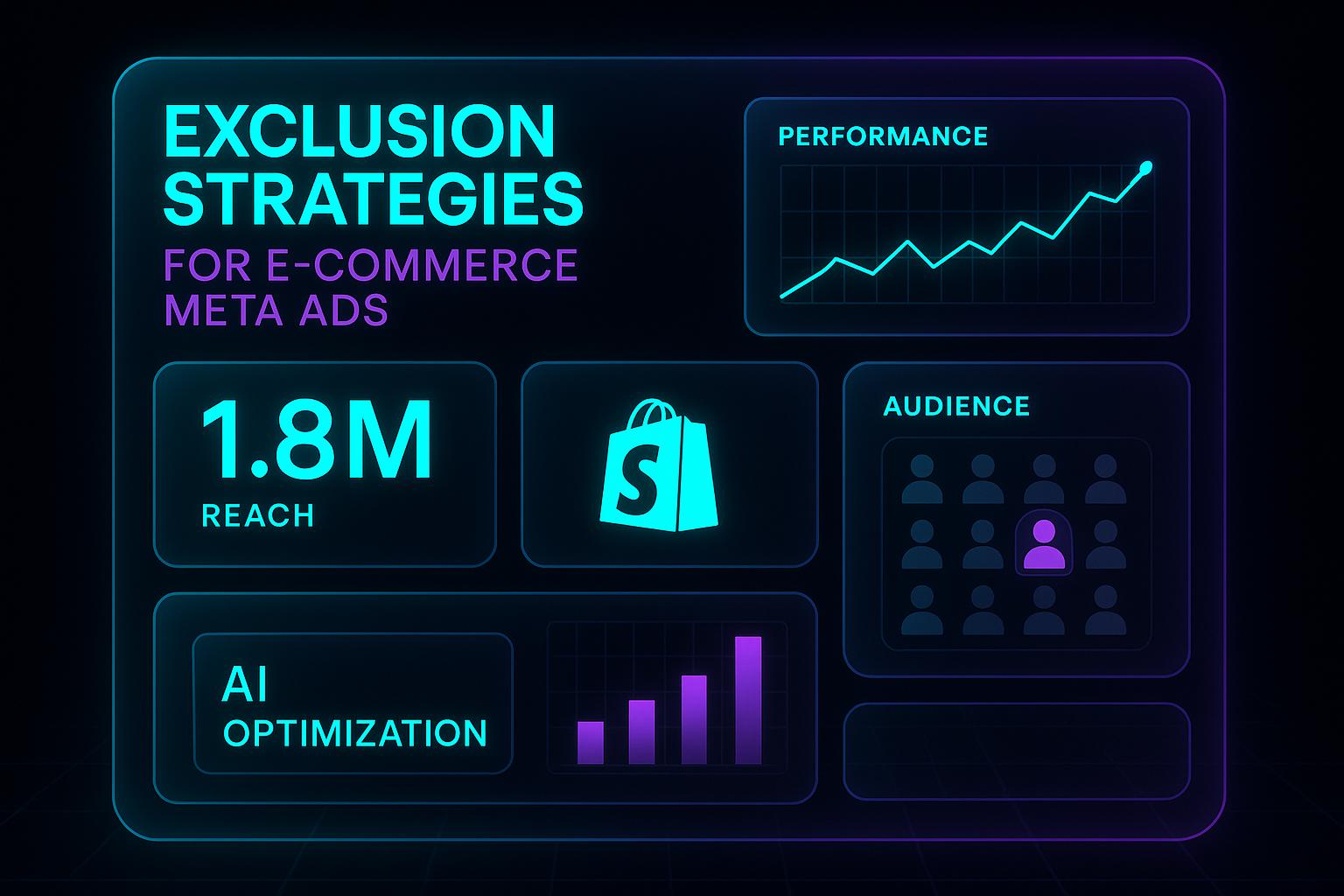
Stop wasting ad spend on the wrong audiences. Exclusion strategies for Meta ads can help e-commerce brands focus on users most likely to convert. By filtering out irrelevant groups - like current customers, cart abandoners, or low-performing demographics - you can improve ROI and reduce wasted impressions. Here’s the core idea:
- Exclude existing customers from acquisition campaigns to focus on finding new buyers.
- Target cart and browse abandoners separately with retargeting ads instead of cold outreach.
- Filter out low-converting demographics or regions with poor delivery experiences to improve efficiency.
Meta’s 2025 updates make exclusions easier, with enhanced Pixel data integration and faster audience updates. But avoid over-excluding - leaving enough room for Meta’s algorithm to learn is key to maintaining performance.
The result? Smarter spending, better targeting, and higher returns. Keep reading for actionable tips to refine your exclusion strategy.
How to Exclude Existing Customers from Advantage+ ASC Campaigns (Increase ROAS)
Put the playbook to work
Apply this playbook to your page
Paste your website and the Lab will turn the strategy you are reading into a ready-to-test ads.
Free to try No prompt writing
Core Exclusion Strategies for E-Commerce Meta Ads
To make the most of your Meta ad budget, align exclusions with your customer journey. This approach helps eliminate wasted spending while maintaining audience sizes large enough for Meta's algorithm to work effectively. Each strategy sharpens your targeting without compromising the algorithm's ability to learn and optimize.
Excluding Current Customers
Avoid spending ad dollars on customers you've already won. By excluding existing customers from acquisition campaigns, you can redirect your budget toward attracting new prospects. Use criteria like purchase recency and lifetime value to create these exclusion lists.
For example, exclude customers who’ve purchased within the last 30-90 days from acquisition campaigns. This timeframe typically matches the repurchase cycle for most e-commerce categories. For high-value customers who buy more frequently, consider shorter exclusion periods or move them into retention campaigns tailored to their behavior.
You can also segment exclusions by one-time buyers versus repeat customers or by product categories. This level of detail ensures your acquisition campaigns target the right audience while retention campaigns focus on nurturing existing customers.
To implement, upload customer email lists or phone numbers into Meta's audience manager. Apply these exclusions at the campaign level and update the lists weekly - especially during high-sales periods when your customer base grows quickly.
Cart and Browse Abandoners
Once you've excluded current customers, the next priority is managing cart and browse abandoners. These users have already shown interest but haven't completed their purchase, making them ideal for retargeting rather than cold prospecting.
For cart abandoners, exclude them from cold acquisition campaigns for 7-14 days after they abandon their cart. During this window, you can run dedicated cart recovery campaigns with messaging tailored to their abandoned items. For browse abandoners, a shorter exclusion period of 3-7 days is often sufficient.
The ideal exclusion window depends on your product type and sales cycle. For instance, fashion and electronics brands might see cart abandoners return within 3-5 days, while larger purchases like furniture may require a 14-30 day window. Keep an eye on retargeting performance and adjust these timeframes as needed.
To set this up, use Meta Pixel events like "AddToCart" and "ViewContent." Create custom audiences based on these actions and their respective time windows. Then, exclude these audiences from prospecting campaigns while funneling them into retargeting efforts.
Low-Converting Demographics and Audiences
Another way to boost efficiency is by excluding demographics or audience segments that consistently underperform. Once your campaigns have run for a few weeks, analyze your conversion data to identify patterns.
For example, common low-performing groups might include age ranges outside your target demographic, regions with poor delivery experiences, or interest-based audiences that click but rarely convert. If your beauty products don’t resonate with users aged 18-24 despite high engagement, excluding this group from acquisition campaigns can help improve your return on ad spend.
That said, don’t overreact to limited data. Only exclude demographics based on statistically significant patterns - such as over 100 conversions - and reassess these exclusions regularly. Market trends and product positioning can change, and what doesn’t work today might become viable in the future.
Geographic exclusions are particularly important for e-commerce. If certain states or regions show high cart abandonment rates due to shipping costs or delivery delays, exclude these areas from campaigns promising fast shipping or free delivery. Instead, run campaigns that set realistic expectations about delivery times and costs for those regions.
Together, these exclusion strategies help focus your ad spend on audiences with the highest potential, improving overall ROI while keeping your campaigns efficient and effective.
Advanced Exclusion Methods for E-Commerce
When it comes to refining Meta ad performance, advanced exclusion strategies can take your campaigns to the next level. These techniques go beyond the basics, helping e-commerce brands ensure every ad dollar is spent on reaching the right audience. By addressing more complex scenarios, these exclusions help avoid wasted spend and keep campaigns running efficiently.
Geographic and Delivery Zone Exclusions
Effective geographic exclusions involve more than just skipping areas where you don't deliver. Dive into your fulfillment data to pinpoint regions that consistently rack up high shipping costs or face recurring delivery challenges. Excluding these areas from free shipping or promotional campaigns can save both time and money.
Seasonality is another factor worth considering. For example, if you're selling swimwear, running ads in colder regions during winter might not yield great results. Meta's geographic targeting tools allow you to exclude specific cities, zip codes, or even set radius-based exclusions around areas with lower conversion rates.
For international sellers, logistical hurdles like fluctuating currency rates or customs delays can also impact campaign success. If these issues make it harder to provide a smooth customer experience, consider temporarily excluding affected regions during time-sensitive promotions. These adjustments can help you maintain steady performance while avoiding unnecessary complications.
Competitor and Industry Professional Exclusions
Sometimes, your ads attract attention from people who aren’t going to buy - like industry professionals or competitors. While they may engage with your ads out of curiosity, their interactions can inflate engagement metrics and increase costs without driving conversions. With Meta's removal of detailed targeting exclusions in March 2025, you’ll need to get creative to address this.
One workaround is to run a low-budget awareness or traffic campaign aimed at interests commonly associated with industry professionals. Use this campaign to gather engagement data (like ad clicks or profile visits), and then build Custom Audiences to exclude these low-intent users from your main sales campaigns. For B2B e-commerce, excluding users who interact with competitor content can also help. Additionally, creating Lookalike Audiences based on competitor followers can refine targeting and improve results.
Product Category Exclusions for Multi-Product Stores
If you run a store with multiple product categories, you know how tricky it can be to avoid showing customers irrelevant or redundant product ads. Setting up exclusion rules can help. For instance, block ads for products that customers recently purchased while still promoting items that complement their previous buys.
The length of the exclusion period should match the product type. Durable goods with longer purchase cycles might need a longer exclusion window, whereas consumable products could warrant a shorter one. For seasonal campaigns, time your ads so that customers are only targeted when the products are relevant. Automating exclusion schedules based on purchase history and seasonal trends can make this process more efficient.
Cross-category exclusions can also help maintain a consistent brand image. A luxury brand, for example, might choose not to promote budget-friendly items to customers who prefer premium products. Similarly, subscription-based services can exclude active subscribers from acquisition campaigns while focusing on upselling or cross-selling complementary products. These tailored exclusions ensure more precise targeting and a better customer experience.
Managing Exclusions with Meta's Learning Phase
Meta's algorithm thrives on data to optimize effectively. If exclusions are too restrictive, you risk narrowing the audience too much, which can hinder the learning process and drive up costs. These strategies build on earlier exclusion practices, ensuring that precise targeting doesn't come at the expense of algorithm performance.
Maintaining Audience Size for Learning
Once you've fine-tuned exclusions to zero in on the right audiences, it's crucial to keep the audience size large enough for Meta's algorithm to gather sufficient data and learn efficiently.
- Combine similar audiences and allocate a higher budget per ad set to speed up the optimization process.
- When using Custom Audiences for exclusions, ensure the remaining audience is broad enough to support effective learning. Meta's overlap tool can help confirm that your ad sets aren’t competing for the same users. Too much overlap or excessive exclusions can limit your reach and slow down learning.
- Opt for broad targeting combined with strategic exclusions rather than overly narrow interest-based targeting with multiple exclusion layers. For example, you could target users aged 25–54 and exclude only key groups like recent purchasers, instead of choosing "online shopping enthusiasts" along with several additional exclusions.
Budget timing is also critical. Avoid making changes to exclusions during the learning phase, as it can reset the process and delay optimization.
Campaign vs. Ad Set Level Exclusions
Deciding whether to apply exclusions at the campaign or ad set level can significantly impact performance.
- Campaign-level exclusions are ideal for broad, overarching rules - like excluding recent purchasers or users outside specific delivery zones. This approach ensures consistency across all ad sets and simplifies management.
- Ad set-level exclusions work best for more granular adjustments, such as excluding users interested in a specific competitor category. When testing, focus on one variable at a time to avoid fragmenting your audience and complicating the learning process.
Conclusion: Improving ROI with Smart Exclusions
Smart exclusion strategies are a game-changer for Meta advertising. They help cut down on wasted spend, focus budgets on the right audiences, and feed Meta's algorithm the data it needs to perform at its best.
At the core of effective exclusions is lifecycle management. For example, excluding recent purchasers prevents redundant ad impressions, while targeting cart and browse abandoners encourages them to complete their purchases. Geographic and demographic exclusions further refine your audience, ensuring your ads reach people who are more likely to engage.
For those looking to go further, advanced tactics like competitor filtering and product category exclusions can fine-tune targeting - especially for multi-product stores or highly competitive markets - without disrupting the algorithm's learning process.
The key is balance. Overly restrictive exclusions can shrink your audience too much, driving up costs and slowing optimization. But when exclusions are thoughtfully applied at the campaign or ad set level, they can maintain algorithm efficiency while improving performance.
The result? Smarter spending, faster learning, and better returns. By focusing on high-intent users, you can lower your CPA, boost your ROAS, and make your Meta campaigns work harder for you.
FAQs
How can I identify and exclude underperforming demographics or regions in my Meta ad campaigns to boost ROI?
To get more out of your Meta ad campaigns, start by digging into your performance data. Look for demographics or regions where engagement is low or costs are unusually high. Once you’ve pinpointed these underperforming areas, use custom audience exclusions to redirect your budget toward segments that are delivering better results.
With recent updates limiting detailed targeting exclusions, you’ll need to rely more on Facebook’s algorithm. Tools like lookalike audiences and interest-based targeting can help you fine-tune your strategy. Keep a close eye on your campaigns and make adjustments as needed to ensure your budget is focused on the audiences that drive the best return on investment.
What are the risks of excluding too many audiences in Meta ads, and how can I keep my campaigns effective?
When you exclude too many audiences in your Meta ads, you might unintentionally shrink your reach, lower ad impressions, and drive up your cost per lead or acquisition. This can hurt your campaign's efficiency and limit its overall success.
To keep your campaigns effective, it’s important to strike a balance between audience exclusion and reach. Take advantage of tools that identify audience overlap and resolve targeting conflicts. Refine your targeting to ensure you're connecting with the right people without overly restricting your potential audience. With the right exclusion strategies, you can minimize ad fatigue, cut down on wasted spending, and boost your campaign’s performance.
How can I use Meta Pixel data to improve my exclusion strategies and reduce wasted ad spend?
Meta Pixel data plays a key role in fine-tuning exclusion strategies by enabling the creation of custom and lookalike audiences based on user behavior. For example, you can identify visitors who have already made a purchase or engaged with specific products. With this information, you can exclude these users from your ad campaigns, ensuring your budget is directed toward attracting fresh, high-potential customers.
When you combine Pixel insights with other behavioral data sources, you can sharpen your targeting even further. This method reduces wasted ad spend on audiences that don’t align with your goals and boosts the overall efficiency of your campaigns. The result? A more streamlined approach to scaling your e-commerce efforts.
Your next ad batch starts here
Finish with a ready-to-test ad batch
Paste your website to generate static creatives. Drop the link → get ads in about 90 seconds → upload them to Meta → scale.
Free to try No prompt writing